Check thresholds and obstacles before buying a robot
Turn doorways, loose objects and low furniture into a route review without inventing climbing or avoidance performance.
Updated:
Map the route under normal conditions
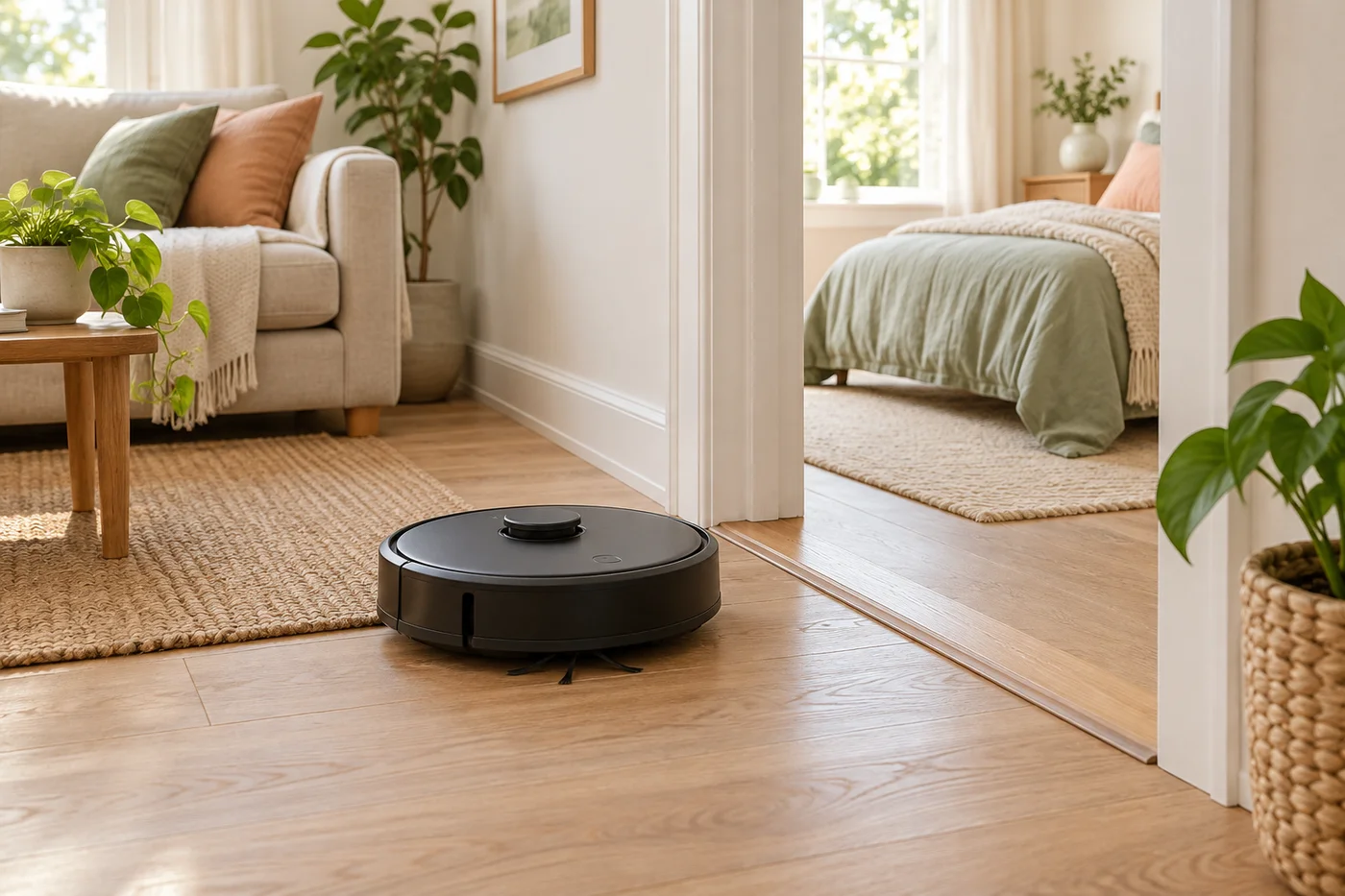
A useful pre-purchase robot review begins with the rooms as they normally look. List doorways, thresholds, low furniture, loose cables and places where belongings accumulate. Distinguish fixed barriers from items you would need to move before each run. This answers a practical question: what route do you expect the machine to follow, and what preparation does that route require? It does not claim that the robot can successfully navigate it.
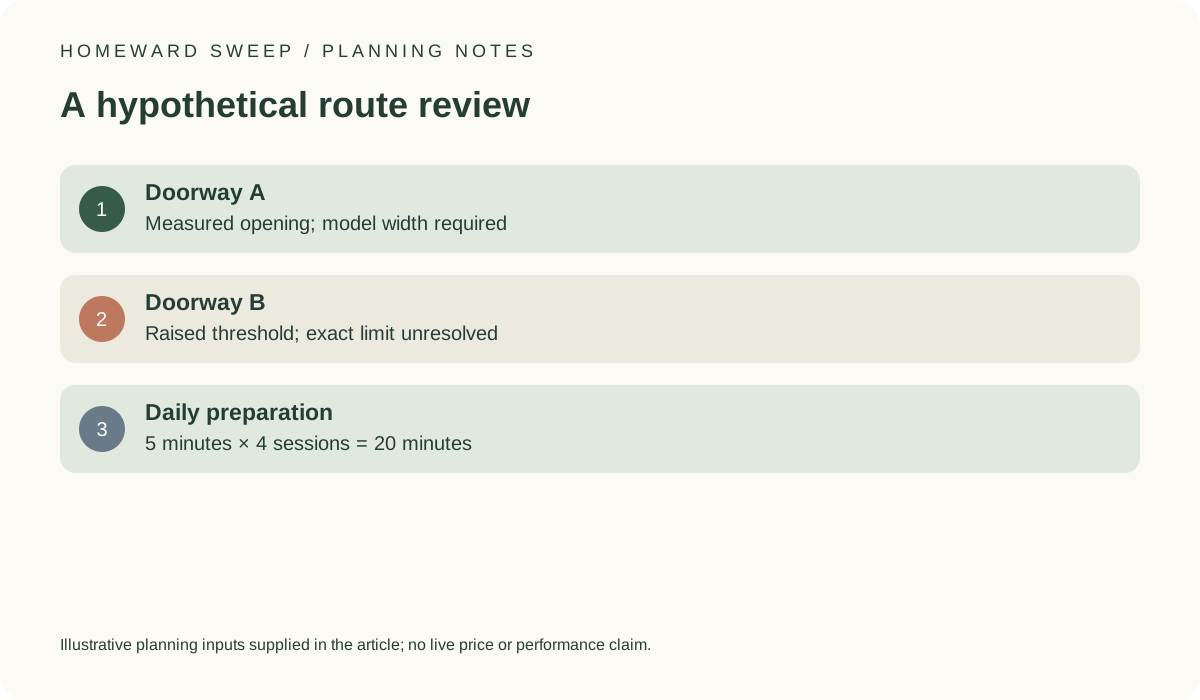
Measure openings rather than judging them from photographs. Preserve the unit and the point measured. A wide opening higher up may narrow close to the floor, where the body actually travels. Keep any irregular shape or uncertainty in the notes so that a model comparison does not silently convert it into a clear passage.
Separate preparation from machine capability
Suppose your intended routine needs 5 minutes of room preparation before each of 4 weekly sessions. Multiplying those hypothetical inputs gives 20 minutes per week. That is your estimated handling time, not the robot's operating time or a measured result. Include it when deciding whether automation reduces the work you want to avoid.
If preparation is occasional rather than weekly, record that different frequency. Do not assume that a marketing term for object detection means every cable or small item can remain on the floor. Identify the exact claimed capability and its stated limits. When no applicable evidence is available, the obstacle stays an unresolved part of the purchase decision rather than becoming an implied promise.
Treat thresholds as a model-specific question
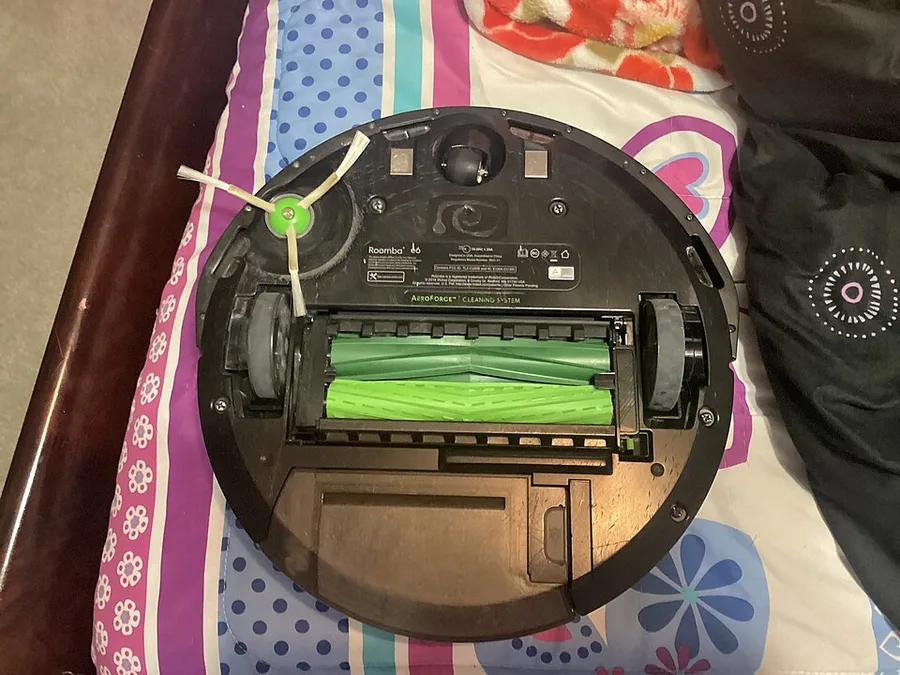
A photograph of wheels cannot establish how high a particular robot can climb or how it behaves on a sharply shaped transition. Record threshold height, width and profile, then compare them with the exact regional model's documentation. Keep the approach from both directions in mind. A statement that a robot crosses a raised edge under certain conditions should not be generalized to every transition with the same nominal height.
Do not construct ramps or modify a threshold on the basis of this guide. The purpose here is to identify the purchasing question before ordering. Where a route remains uncertain, consider whether excluding that room would defeat the intended role of the appliance. That makes the decision concrete without inventing navigation performance.
Review the return route as well
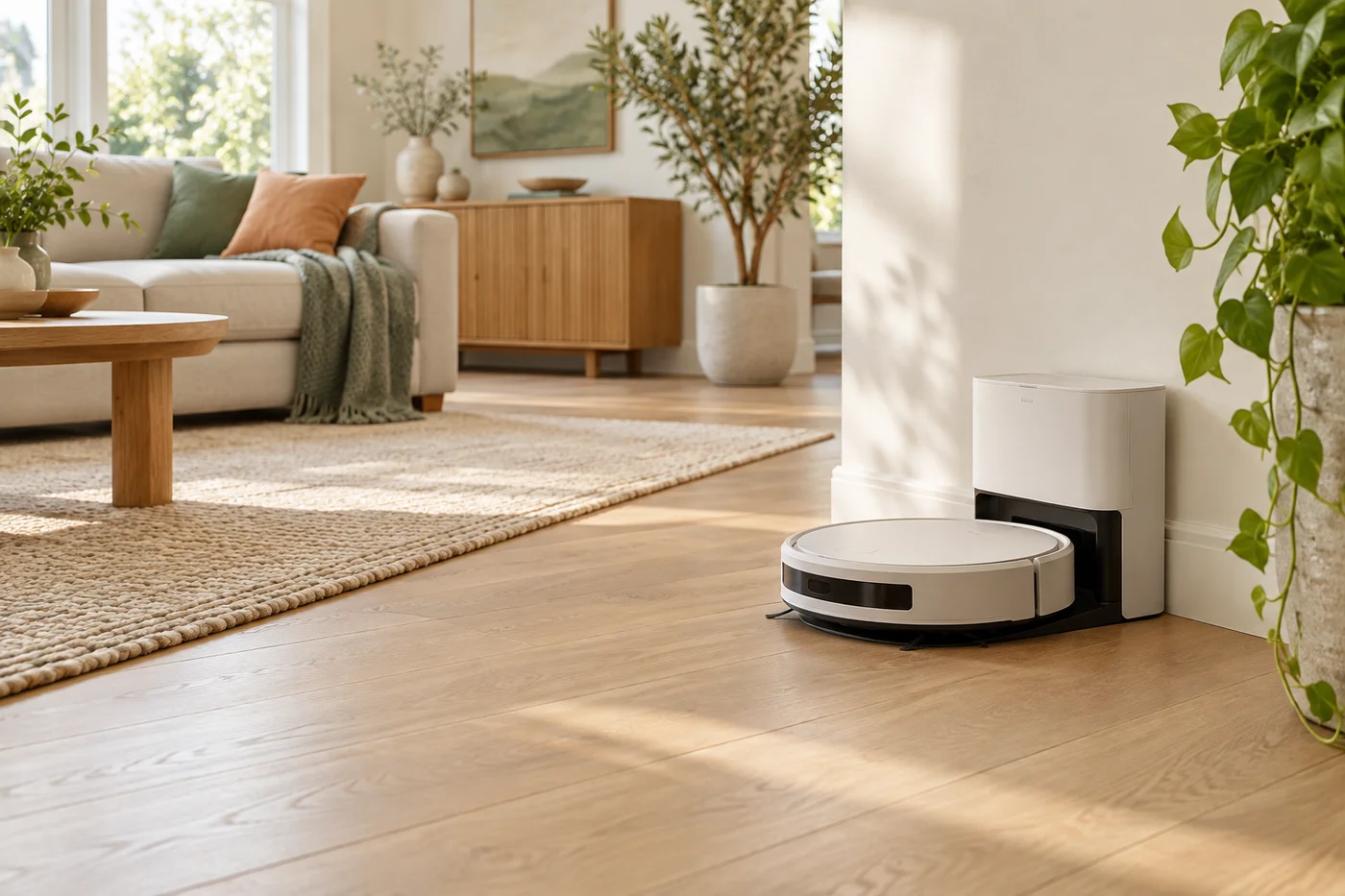
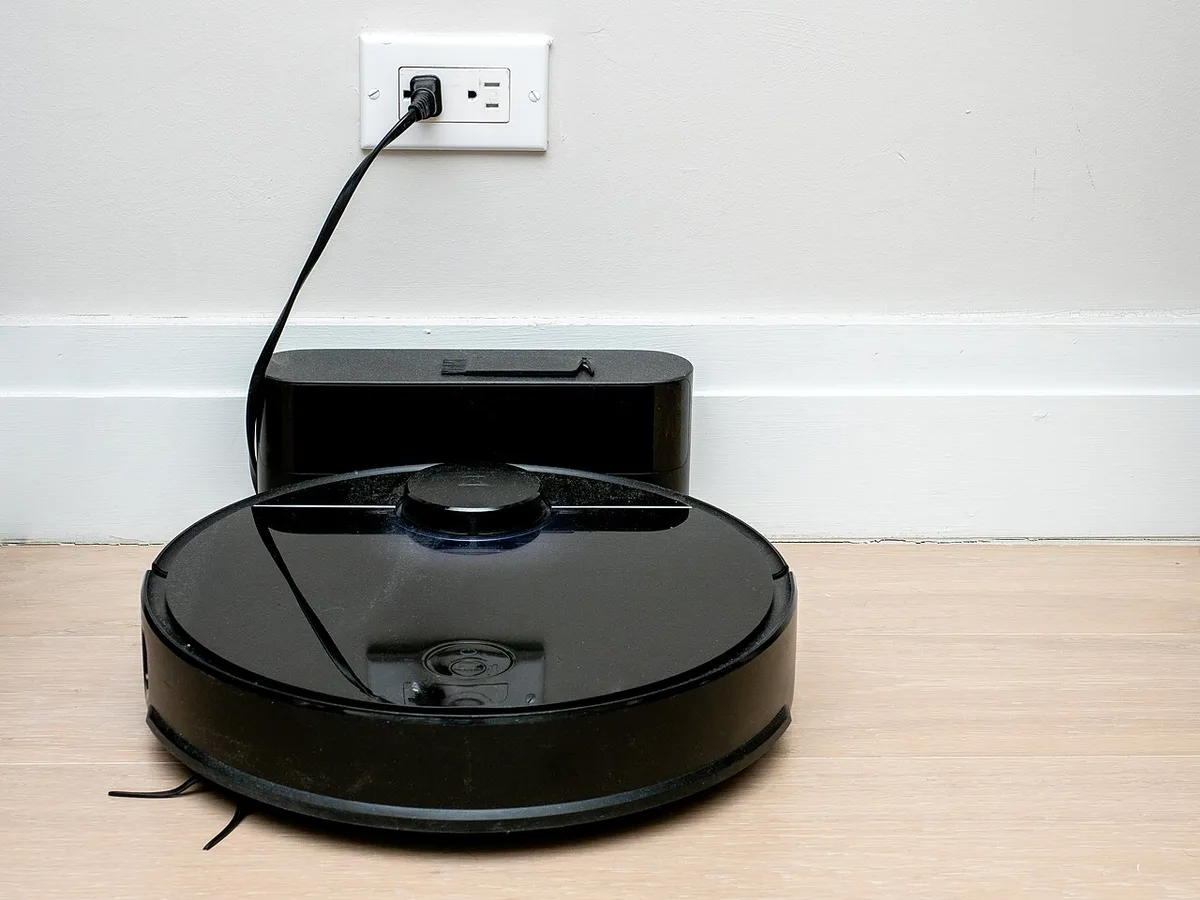
The station approach is part of the route, not a separate detail to address after purchase. iRobot's Home Base guidance illustrates that open space around the station can be a documented requirement. Preserve the instructions for the exact station supplied with the candidate robot. A chair moved into the approach zone after a cleaning run can change the layout that you originally assessed.
Keep stairs and other restricted areas in the model-specific setup review. A floor-plan note or virtual boundary is not a safety certification. Follow the actual instructions for any barriers, exclusion areas or setup process, and do not treat a generic room illustration as evidence that a hazardous route is protected.
iRobot Home Base positioning guidance ?
Make a route decision you can explain
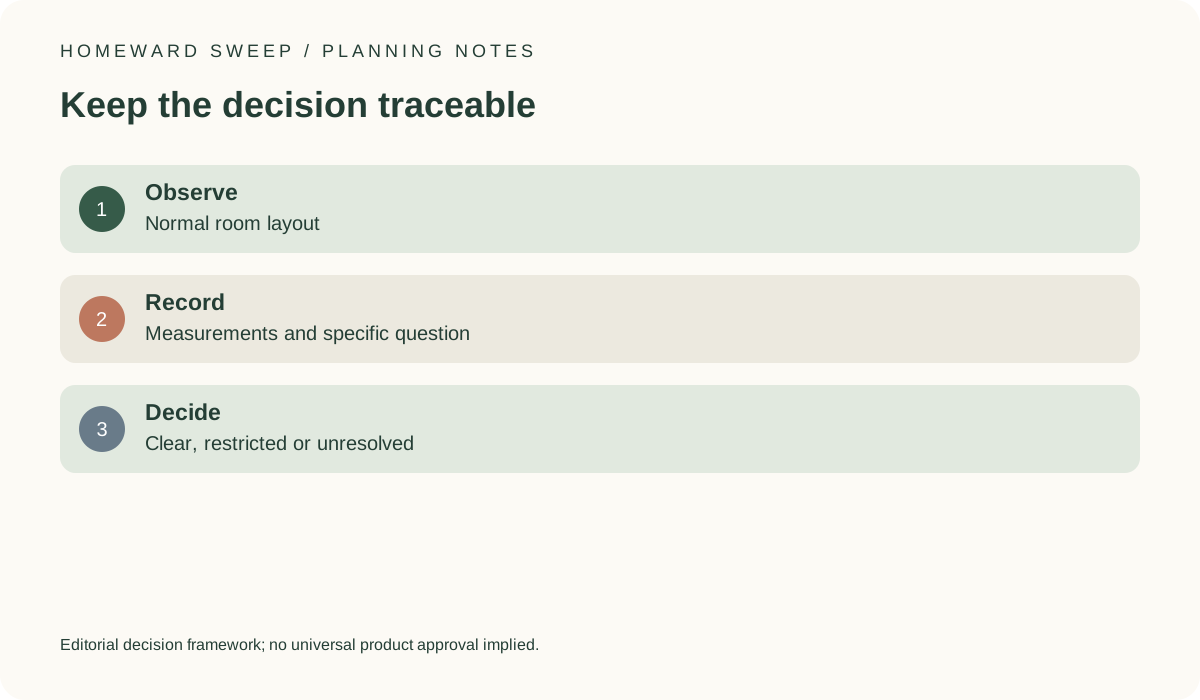
Classify each intended room as clearly within the documented physical plan, excluded from the routine or unresolved. Add the reason: narrow passage, unverified threshold, changing clutter or station access. This is more useful than assigning a single compatibility score that hides the most important obstacle. If the unresolved room contains most of the task you wanted to automate, postpone the purchasing conclusion.
After purchase, real use may reveal layout issues that the drawing missed. Keep the original assumptions so you can update the route rather than claiming the plan was a test. The underside photograph illustrates physical components only. It does not show obstacle avoidance, climbing ability or a guarantee that the appliance can reach every measured square foot.