Separate a return window from a warranty
Keep the seller’s return terms, the product warranty and any paid service contract in different records before ordering.
Updated:

Keep three documents instead of one vague promise
A seller's return policy, a product warranty and a separately sold service contract answer different questions. Save each applicable document before ordering. The return policy describes the seller's stated process and conditions for a return. The warranty describes its stated coverage and claim process. A paid service contract has its own price and scope. Do not collapse these into a single assumption that an unwanted or faulty product can always be sent back on the same terms.
The FTC consumer guide distinguishes service contracts from included warranties and recommends reviewing coverage details. Our guide is a buying-record checklist, not a ruling on an individual consumer claim. The applicable written terms and relevant consumer protections require their own review.
FTC consumer guide to warranties ?
Write down the practical return questions
For the seller's policy, record the deadline, what starts the clock, eligibility conditions, required packaging or accessories and the stated treatment of return costs. Keep the policy that actually applies to the seller and item, including any bundle or condition distinctions. A general brand webpage may not describe a third-party marketplace seller's return process.
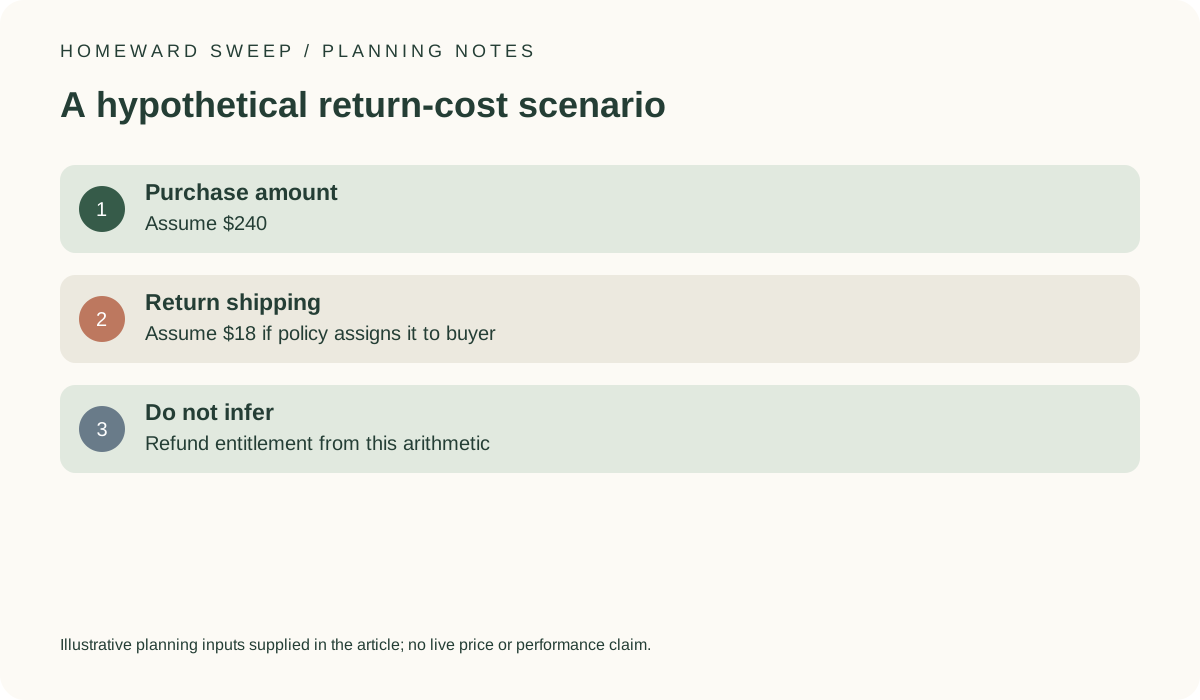
In a hypothetical example, a $240 purchase might involve $18 of return shipping if the applicable policy assigns that cost to the buyer. Those invented inputs illustrate a budget question only. They do not establish refund eligibility, a legal entitlement or the terms of any actual seller. Do not subtract the amount and present the result as a promised refund.
Read what the warranty actually covers
Keep the named provider, covered components, duration and claim process together. The FTC notes that warranty coverage may exclude certain situations or repairs and that the document should explain the remedy and process. Read the actual product warranty rather than assuming that an advertised duration describes every part, supply and expense. Save the model designation so the correct document can be identified later.
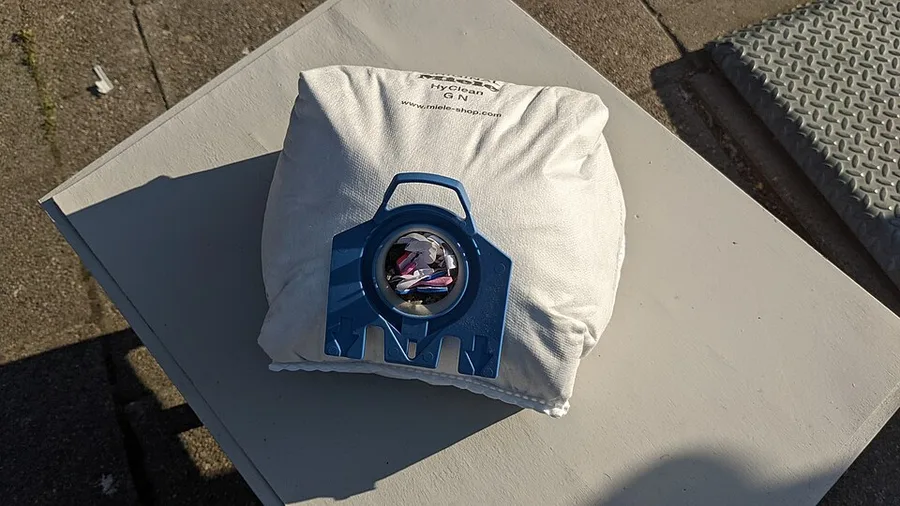
The bag photograph illustrates a consumable that should not automatically inherit every coverage assumption applied to an appliance body. It is not evidence of a particular brand's exclusions. Where a document is unclear, preserve the question for the provider's official process instead of inventing coverage or applying another model's terms.
FTC consumer guide to warranties ?
Compare a paid plan without counting the same benefit twice
If a separate service contract is offered, list its price and written scope next to the included warranty. Identify overlapping periods or types of work, and keep any deductibles, shipping or claim conditions visible where stated. Do not infer added value merely from a longer headline period. This article does not estimate failure probability or advise whether a particular individual should buy a contract.
For a hypothetical budget, adding a $30 service plan to a $240 purchase gives a $270 subtotal before other charges. These are invented figures. The arithmetic is simple, but the purchasing question depends on the actual scope and your needs. A higher total with an unclear benefit should remain an unresolved comparison rather than a claimed saving.
Preserve the evidence needed for the stated process
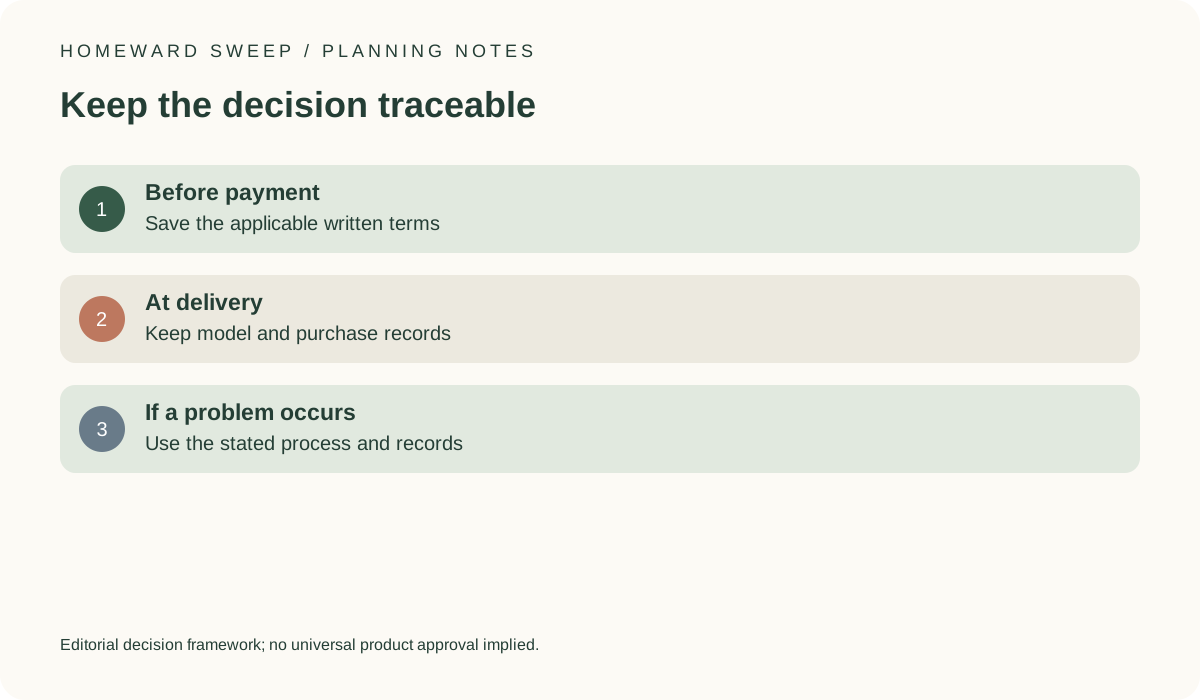
Keep the receipt, seller identity, exact regional model, serial information where appropriate and the saved policy documents. Record bundle contents at delivery without treating a generic product photo as proof. The robot-and-station image illustrates why one order can include several components that need to be identified accurately. It does not show a current offer or establish any return or warranty condition.
If a problem arises, use the process described in the applicable documents and retain the correspondence. Do not treat this checklist as individualized legal advice or a replacement for official consumer guidance. The useful purchasing outcome is a clear separation of return expectations, warranty coverage and any paid contract, with assumptions and unresolved terms visible before payment.