Get floor permission before choosing steam
Use the exact flooring care sheet to resolve steam suitability; a broad appliance claim cannot supply missing surface approval.
Updated:
Resolve the floor before the feature list
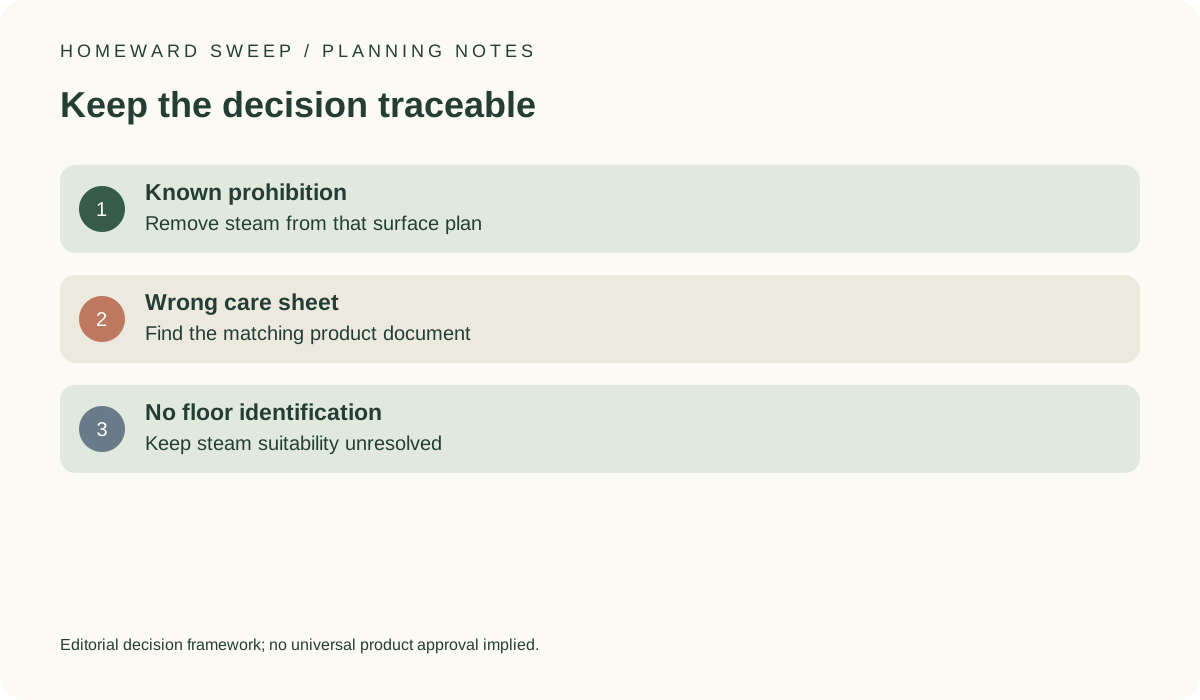
Before buying a steam appliance, identify the installed flooring and obtain its applicable care instructions. The key question is whether that exact surface permits steam, including its finish and any relevant product restrictions. An appearance such as wood-look or stone-look is insufficient. If the flooring is unidentified, keep the steam decision unresolved rather than assuming that an appliance's broad hard-floor description grants permission.
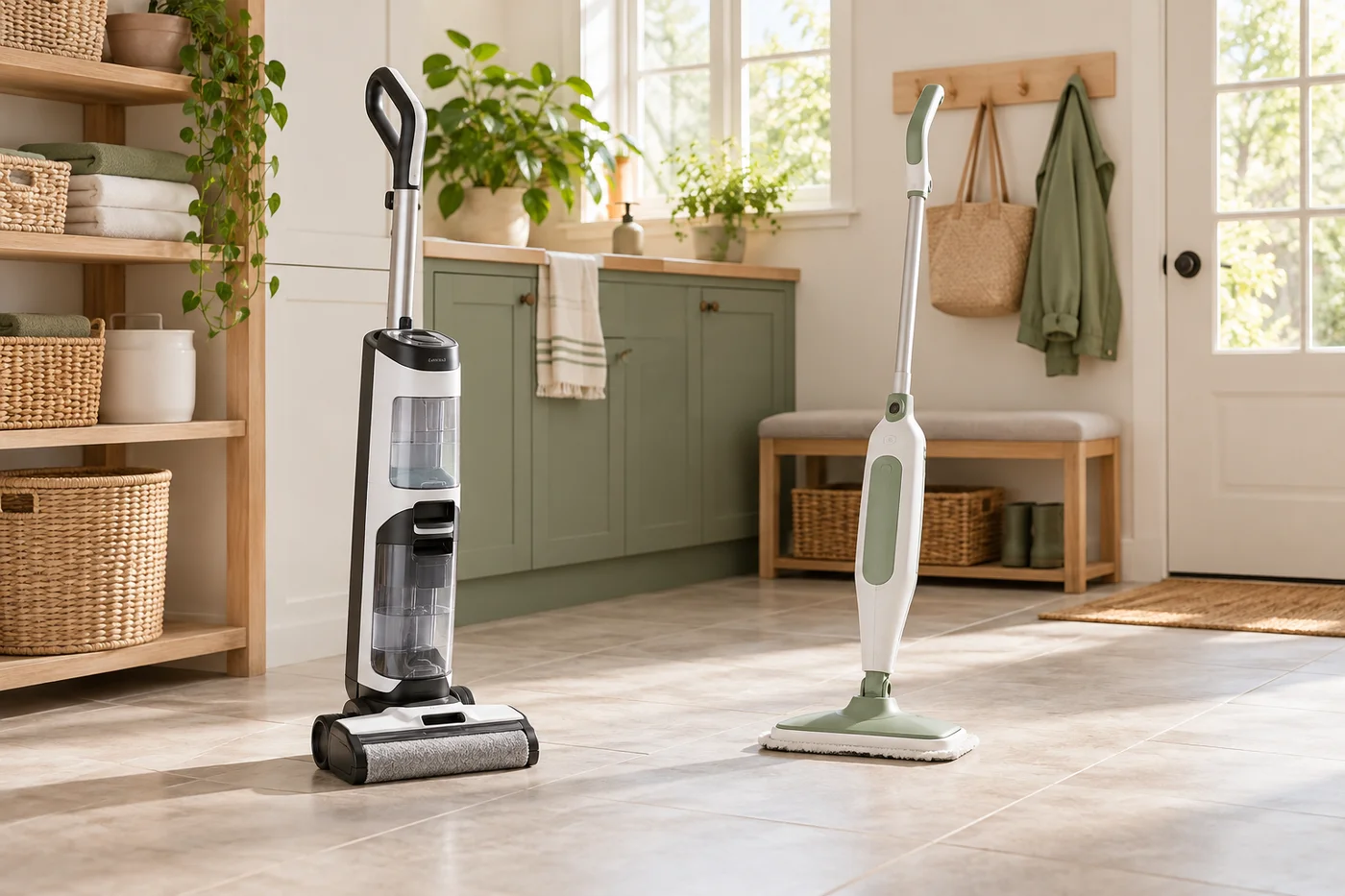
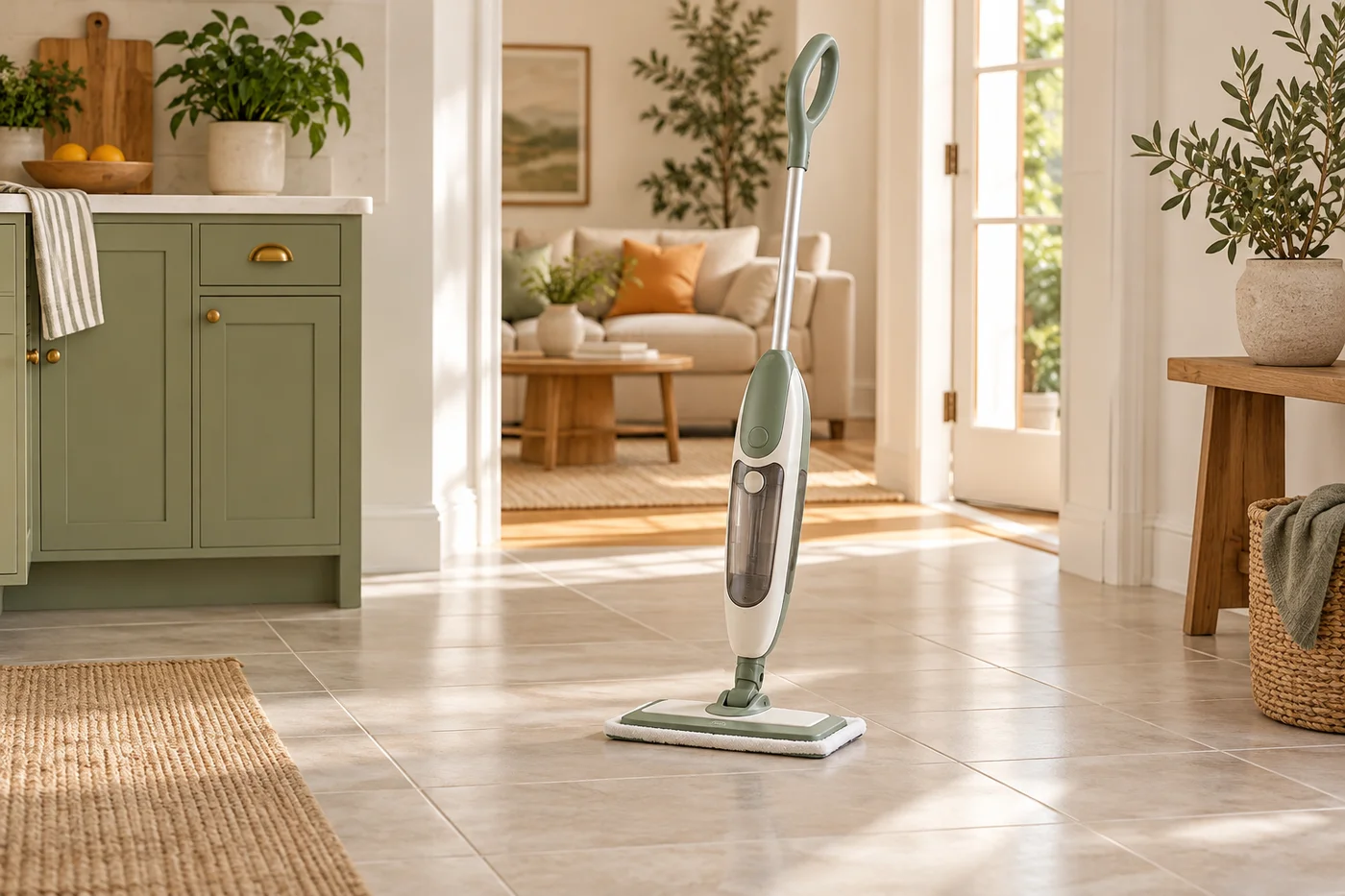
The upright photograph identifies a steam-cleaner form, not a safe combination of machine and surface. A buying guide should not turn an illustrative room into evidence of compatibility. Keep the flooring product name and care-sheet source beside the proposed appliance, so the decision can be reviewed later without relying on memory.
Understand why apparently different claims can coexist
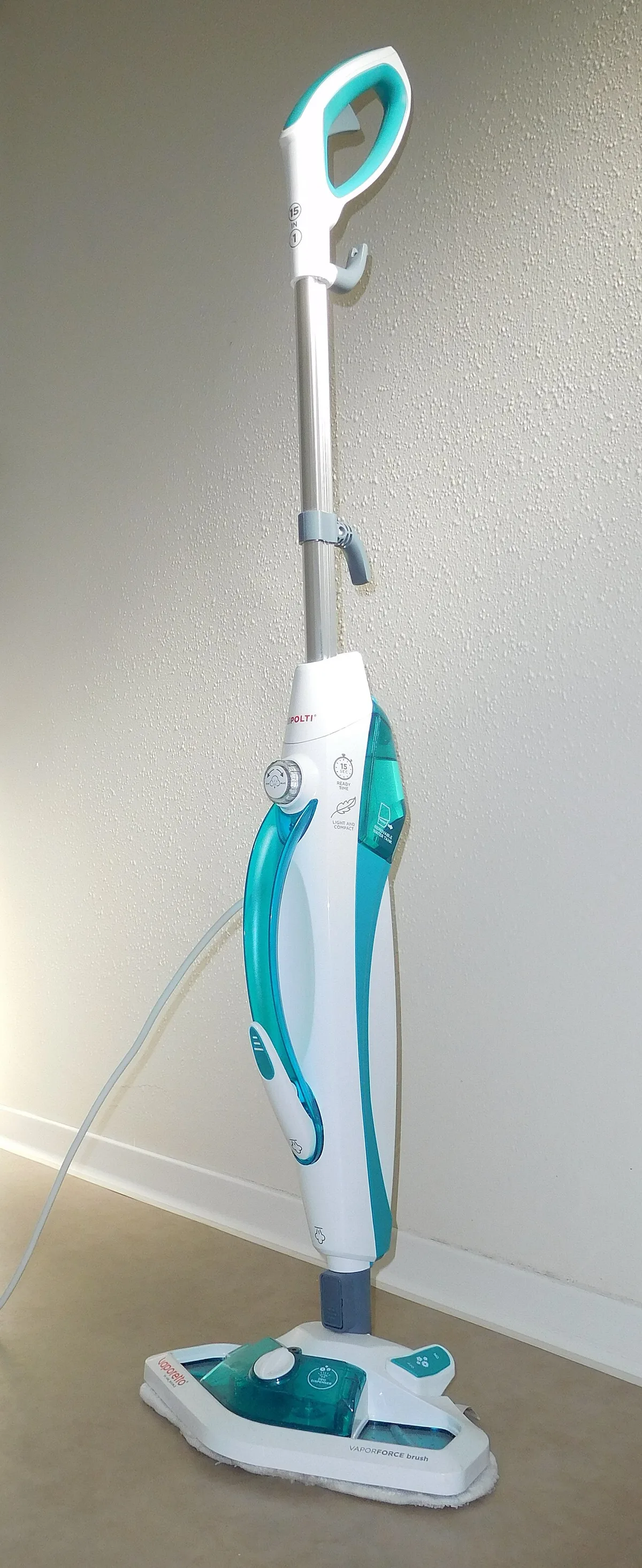
Shark's US steam-mop guidance excludes unsealed wood and unglazed ceramic and tells readers to consult floor care instructions. Shaw's 2019 Floorte homeowner sheet prohibits steam mops on the covered resilient flooring. These are not competing universal rules: each document has its own scope. The exact flooring restriction remains part of the decision even when a general appliance page lists broad surface categories.
Do not settle an explicit floor prohibition by trying a hidden area or by choosing a shorter application time. This guide does not provide an operating workaround. Where the actual care sheet prohibits the method, remove steam from that surface's plan and identify another permitted response to the cleaning task. If the sheet belongs to another collection, obtain the matching one.
Shaw Floorte homeowner care sheet (2019) ? Shark US steam-mop guidance ?
Avoid buying a method for an undefined problem
Name the specific task that remains after ordinary permitted care: a mark, a recurring mess or a desired change in routine. Then examine whether the flooring instructions permit a method that addresses it. A steam feature should not become the reason to use heat on a surface that does not allow it. A larger feature list is not automatically a larger usable capability in your home.
For a hypothetical comparison, a $100 steam appliance plus $20 of approved accessories gives a $120 equipment subtotal. Those invented amounts show why even a seemingly modest purchase deserves the permission check first. If the intended surface prohibits steam, the subtotal does not represent a useful solution for that task, regardless of price.
Keep preparation and care inside the method review
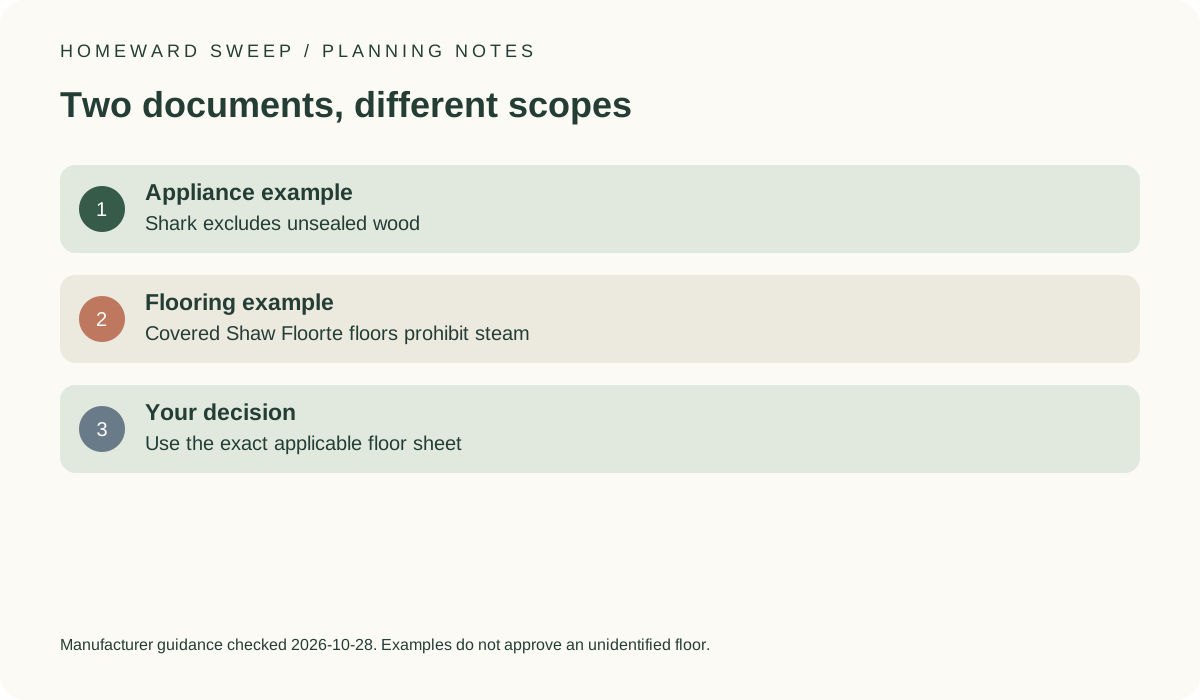
Once steam is actually permitted for the surface and equipment, follow the exact manual for operation, preparation and care. This article is a purchase checklist and deliberately does not substitute a generic operating sequence. Different machines can have different tanks, pads and controls. A photo of one design does not establish instructions for another.
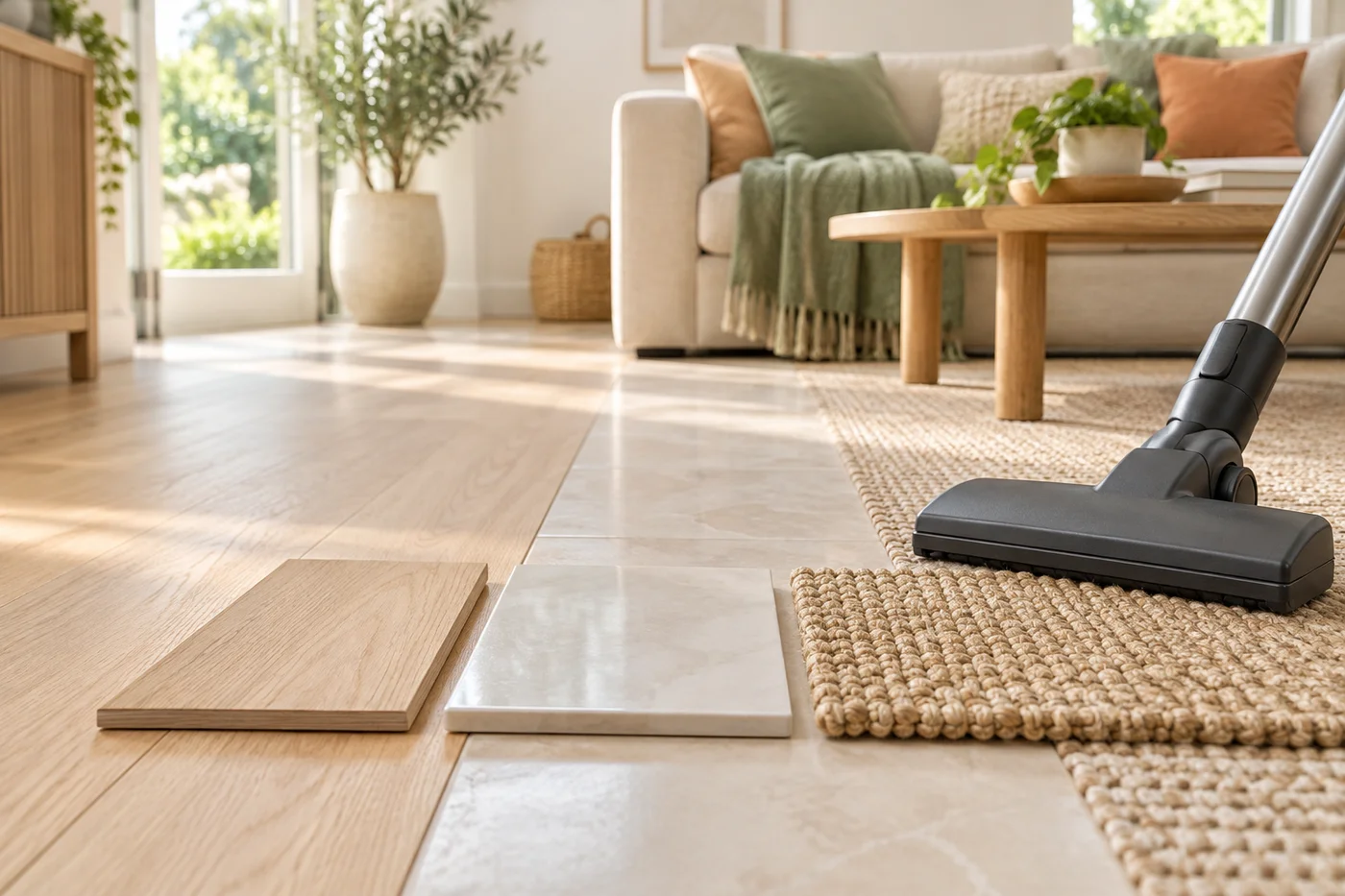
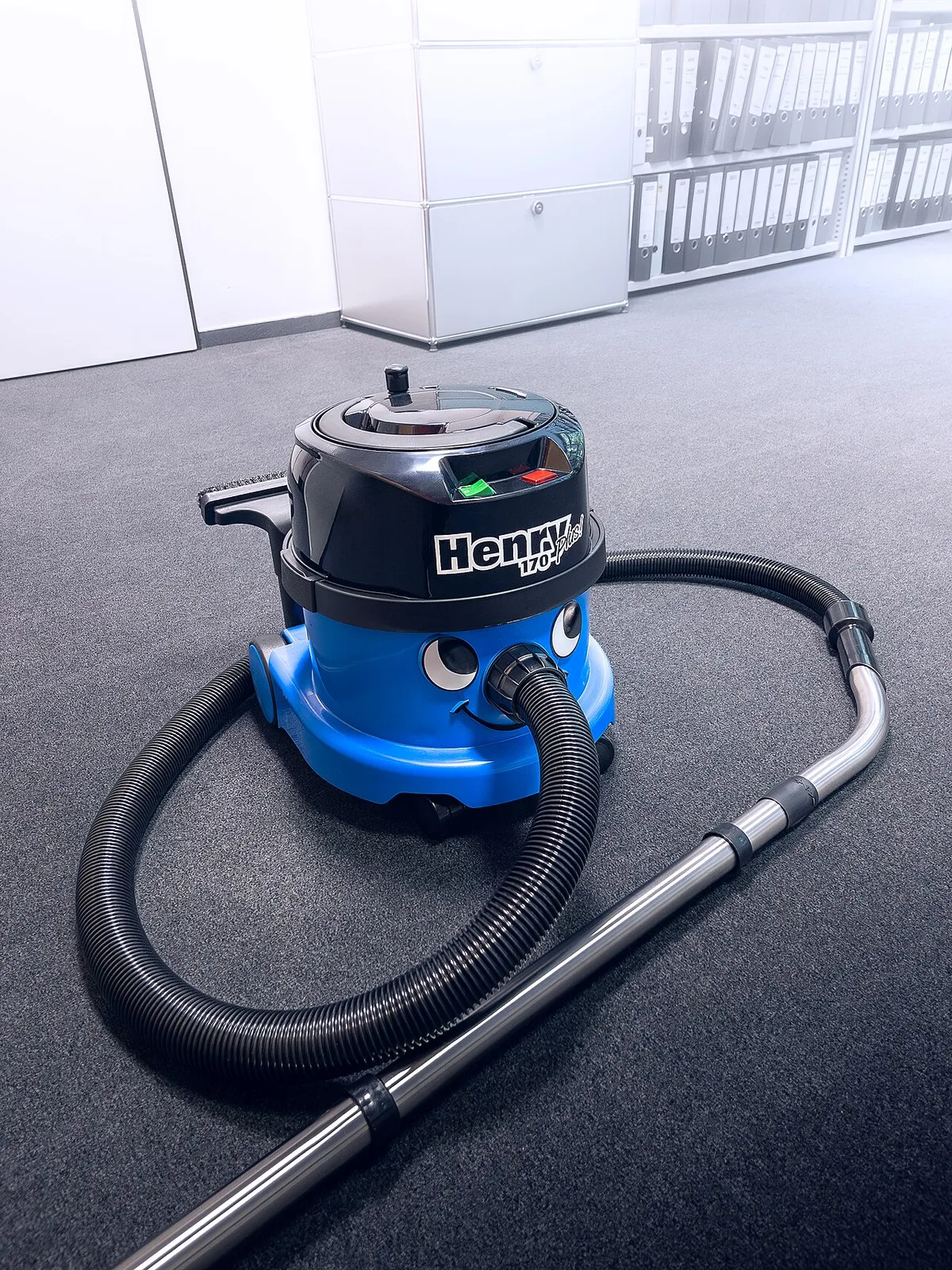
Keep dry soil removal, the permitted cleaning task and equipment care as separate entries. The canister photograph helps distinguish a dry-pickup form from a steam appliance. It does not imply that vacuuming makes every floor suitable for steam afterward. A task sequence cannot remove a surface prohibition, and a clean-looking demonstration cannot prove the long-term effect on an unidentified finish.
Preserve a clear decision in the buying record
Your final note should state the floor product, the applicable document, whether steam is permitted and which appliance instructions were reviewed. Include unresolved areas rather than treating the whole home as one surface. This makes the conclusion useful to another household member who may otherwise see only a cleaner stored in a cupboard.
If steam remains unsuitable or unresolved, redirect the purchase review toward the permitted method and the actual task gap. Do not describe that as a performance failure of an appliance you have not tested. It is a compatibility decision grounded in the available instructions. Retain the source date, because a later floor replacement or a different appliance requires a new review rather than automatic reuse of the old conclusion.