Read cordless runtime with its conditions attached
Keep maximum runtime, actual mode, cleaning task and charging time in separate fields when comparing cordless vacuums.
Updated:
Keep the runtime qualifier beside the number
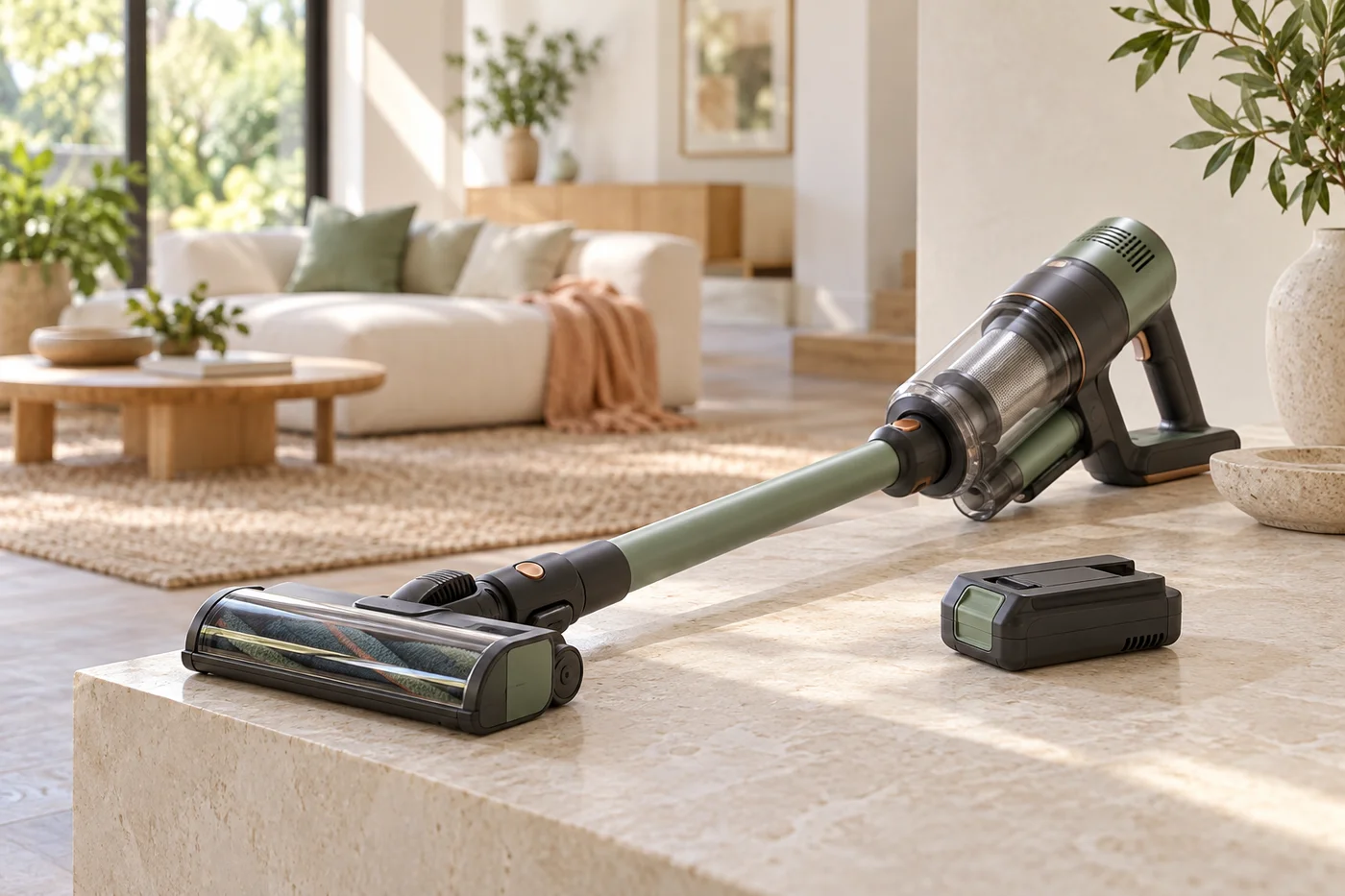
A cordless vacuum's maximum runtime is a stated limit under particular conditions, not a promise that every cleaning job lasts that long on one charge. Save the qualifier with the number when you make a shortlist. A comparison that copies only the largest figure can hide the power mode, attachment and surface conditions that matter to your intended task. The first question is what the published figure actually describes.
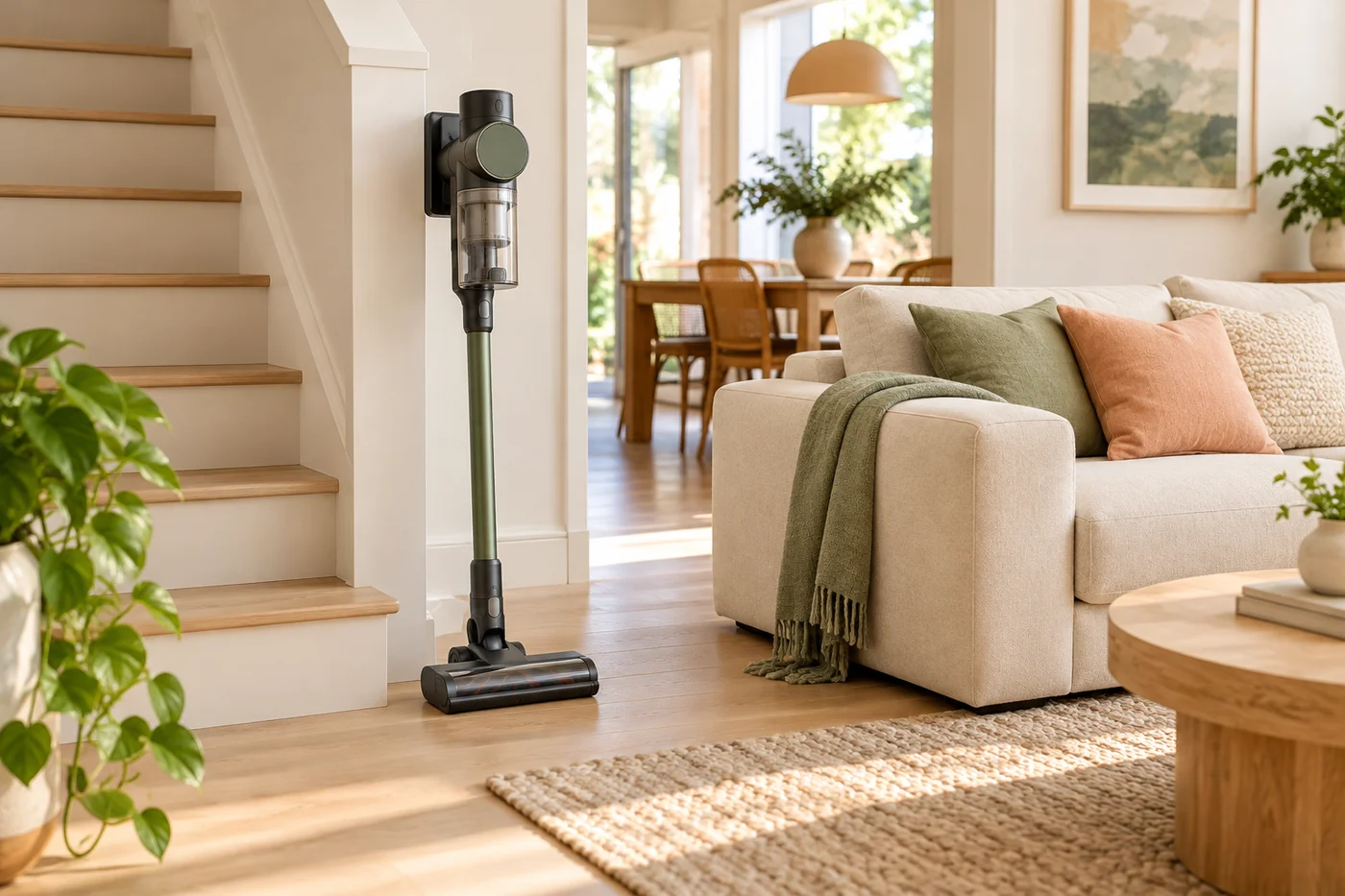
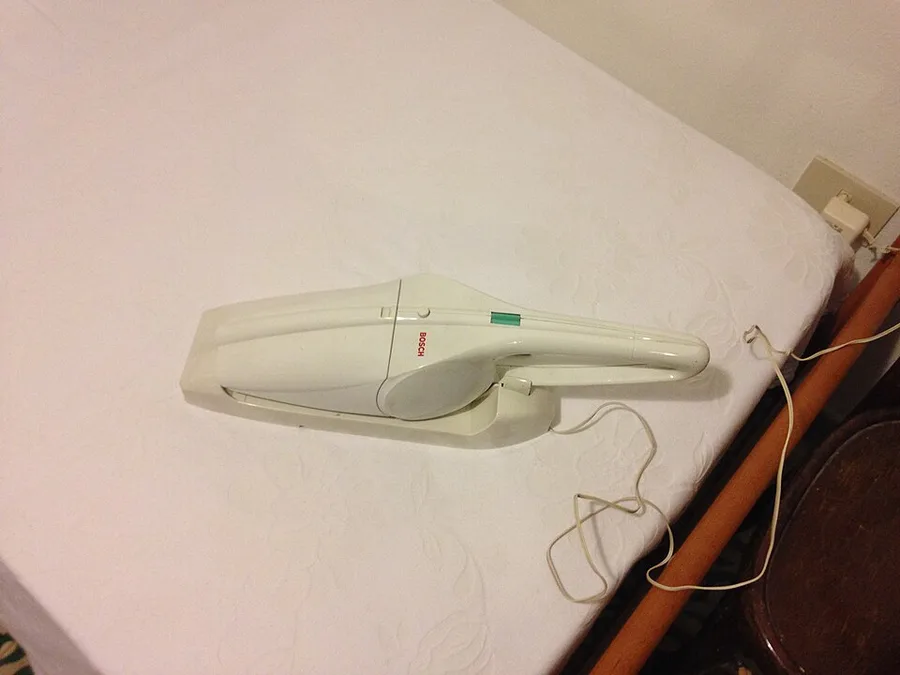
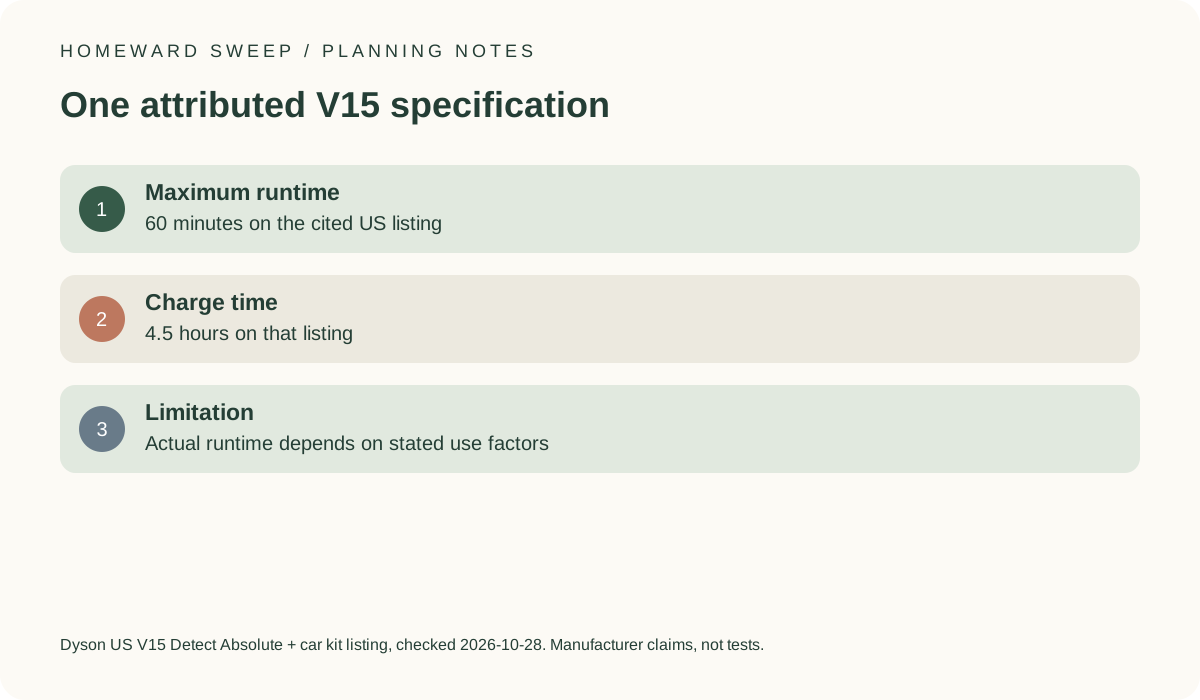
For the cited Dyson US V15 Detect Absolute and car-kit listing, the specification gives a maximum runtime of 60 minutes. Dyson states that actual runtime varies with power mode, dust level, floor type and attachments. This is an attributed manufacturer statement for that listing, not our own test result or a specification for the archival cordless photograph.
Dyson US V15 Detect Absolute and car kit specifications ?
Read charging as a separate scheduling constraint
The same cited V15 listing gives a charging time of 4.5 hours. Keep this in a different column from runtime. Charging describes readiness between uses, while runtime describes operation under its conditions. Adding or comparing those numbers without naming their different roles does not answer whether the machine fits your routine. A removable battery or accessory claim should also be verified for the exact bundle rather than inferred from a similar model.
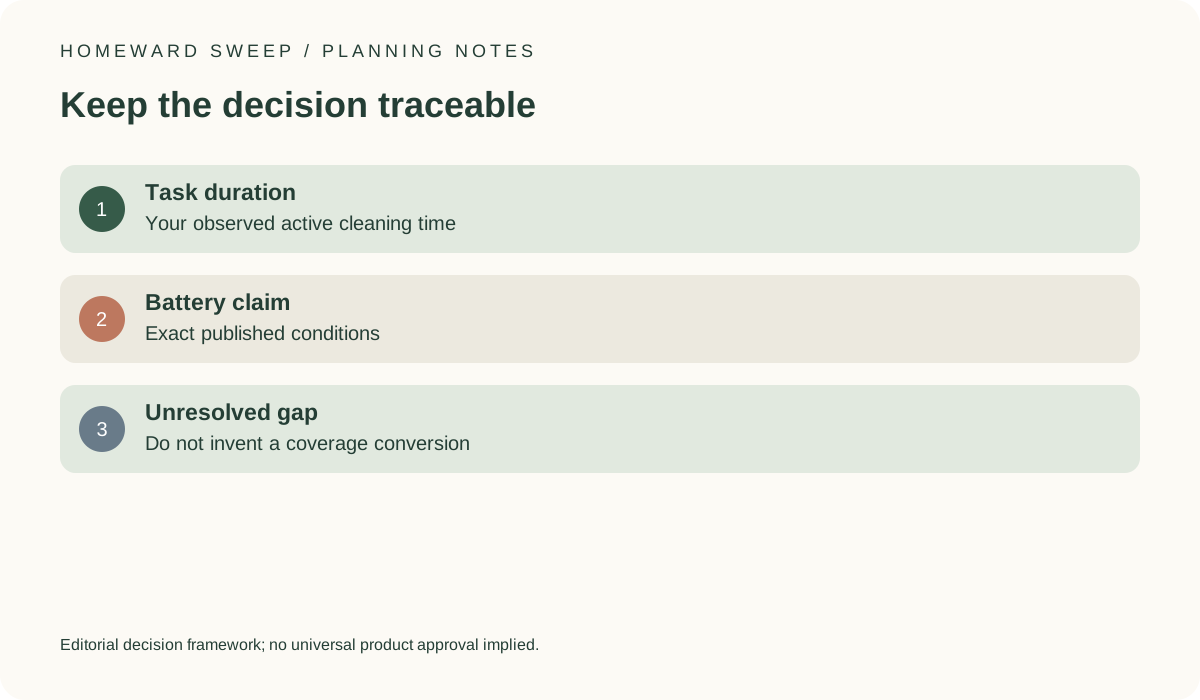
Imagine your own measured task lasts 18 minutes. That observation is useful, but subtracting 18 from a 60-minute maximum does not establish 42 minutes of remaining useful cleaning time under your conditions. Preserve the difference between an observed household task and a manufacturer maximum instead of turning the arithmetic into an unsupported prediction.
Dyson US V15 Detect Absolute and car kit specifications ?
Match the stated mode to the actual task
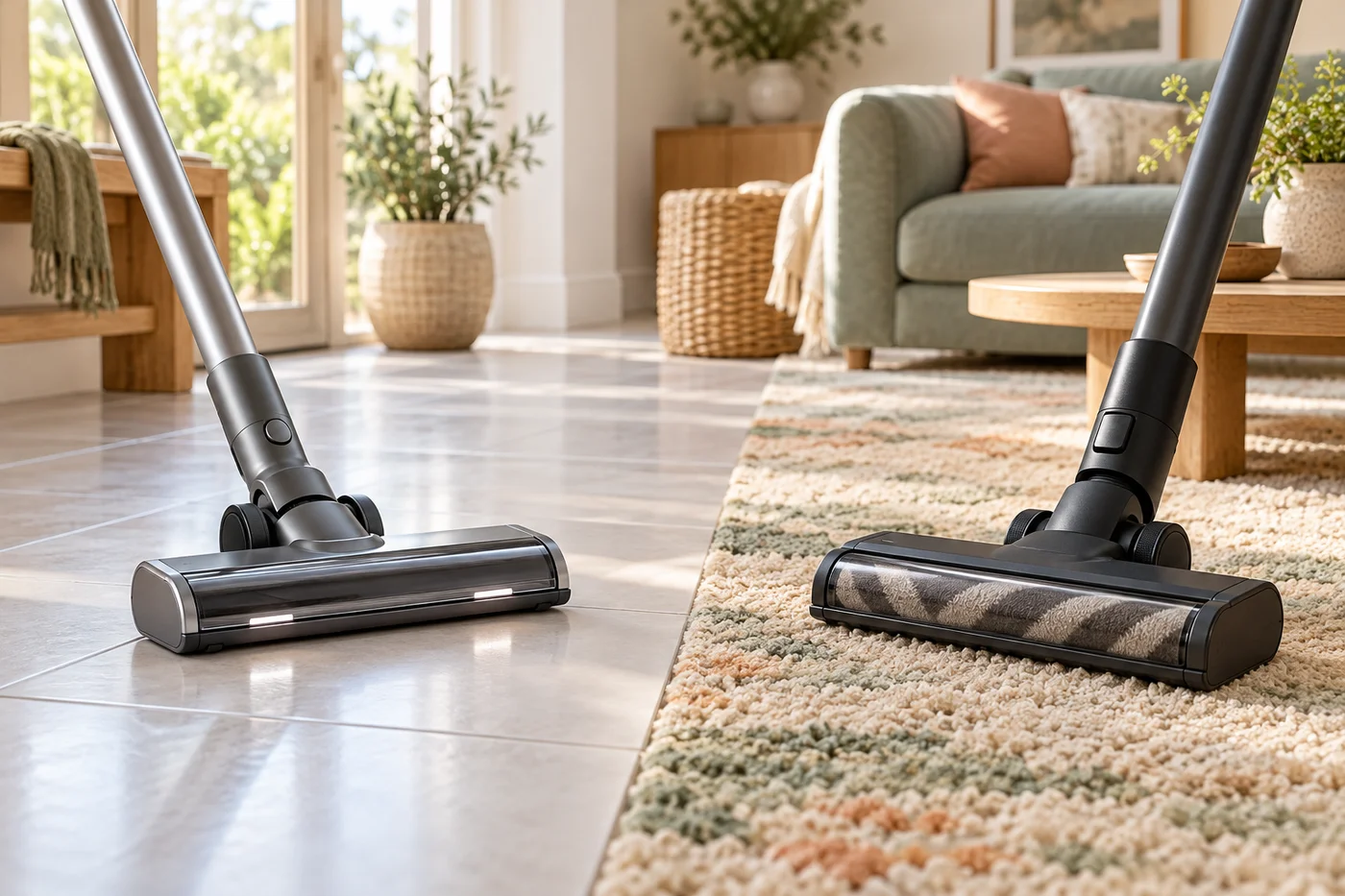
Write down the head, power setting and surfaces you expect to use. If the manufacturer gives different figures for different modes or tools, keep each figure with its matching conditions. Do not choose the longest time from one setup and the strongest performance claim from another as though both occurred together. If the documentation does not answer the exact combination you need, mark that part of the comparison unresolved.
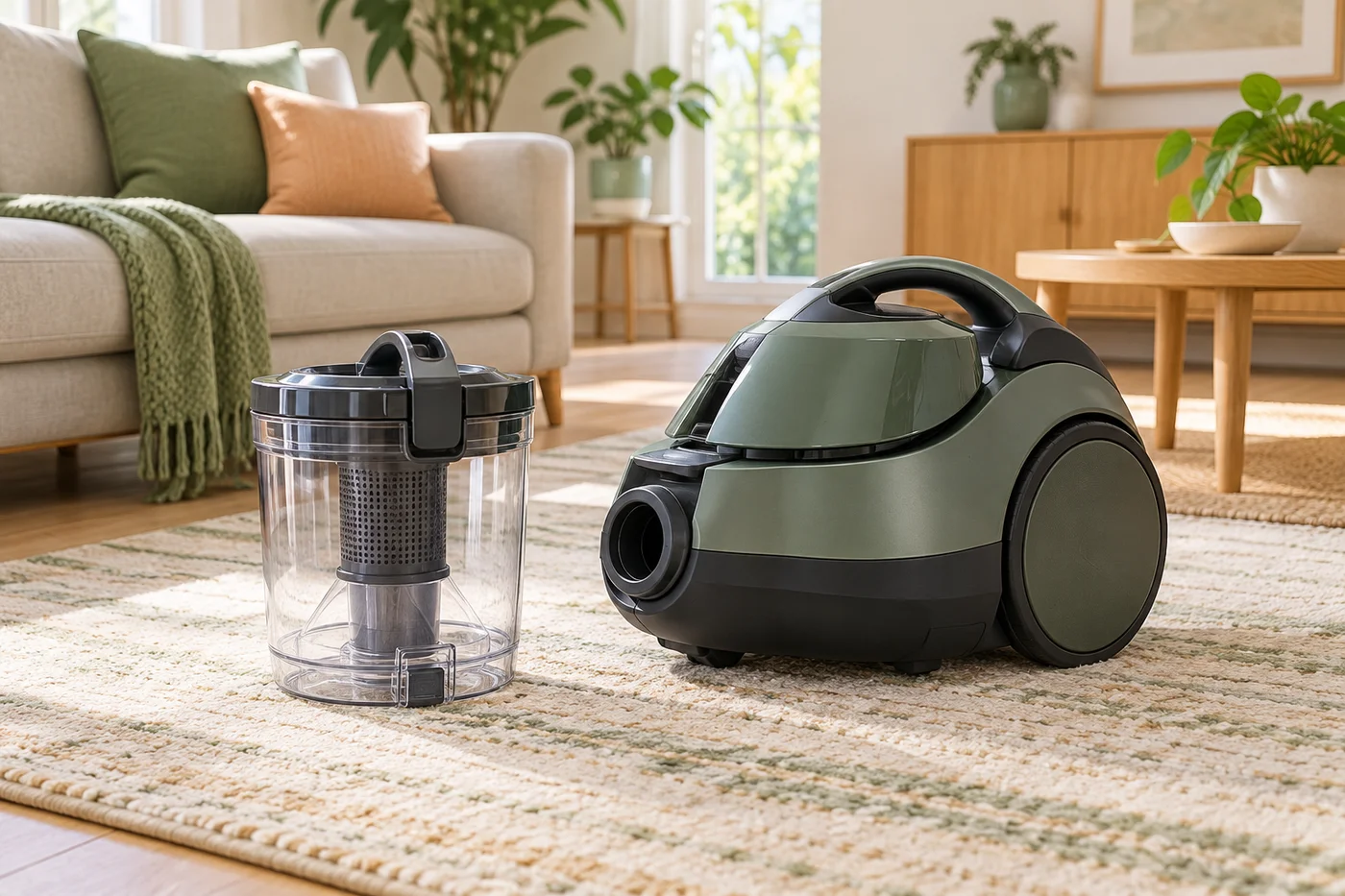
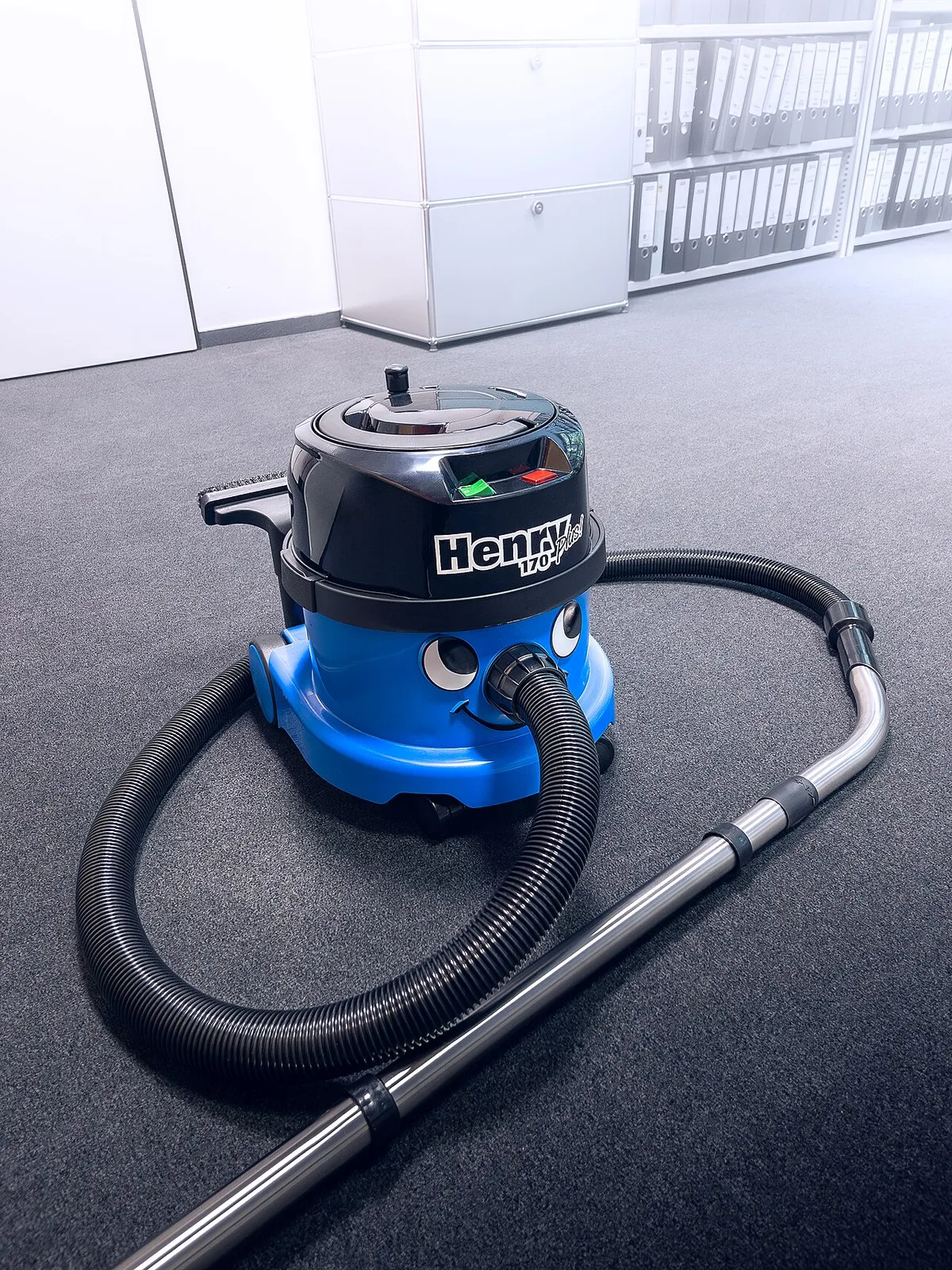
The canister photograph illustrates an alternative power arrangement with a hose and cable. It does not prove superior suction or unlimited practical convenience. Corded and cordless designs each need a task review involving reach, handling, storage and permitted floor heads. Runtime is one condition in that review, not a complete buying score.
Separate active cleaning from elapsed household time
Your session may include moving chairs, changing tools, emptying a bin or putting equipment away. Those actions can affect how the job fits into a day without being identical to powered runtime. Record active cleaning and handling separately if that helps explain the routine. Use our weekly effort tool for your own time assumptions; it does not estimate battery discharge.
For a hypothetical schedule of 18 active minutes on each of 3 occasions, the weekly active task is 54 minutes. This does not mean a battery with a 60-minute headline claim can serve all sessions without charging. The claim's conditions, actual use and intervals between sessions remain separate considerations. Keep them visible before assigning a convenience benefit.
Make a comparison that survives a bundle change
Save the exact model designation, included heads and battery information with the dated source. A retail bundle can differ from another listing carrying a similar family name. If the accessories change, revisit the runtime conditions rather than copying the old comparison. Avoid treating archived pictures as proof of what is currently included in the box.
The useful purchasing conclusion is modest and concrete: the documented runtime conditions are understood, the charging arrangement fits your schedule, and unresolved task questions are identified. It should not become a guarantee about whole-home coverage or a claim that our planning arithmetic measured cleaning performance. Reassess the record when your room layout or cleaning routine changes.