Budget for bags, filters and replacement pads
Build a transparent annual allowance from compatible part identifiers, pack quantities and declared replacement assumptions.
Updated:
Create a parts list before an annual total
Start the consumable plan with the exact machine and its compatible parts. Separate bags, filters, pads and other supplies rather than placing everything under an unexplained maintenance charge. For each item, retain the identifier, pack quantity and the source of the compatibility information. A low price does not make a part suitable if the fit has not been established.
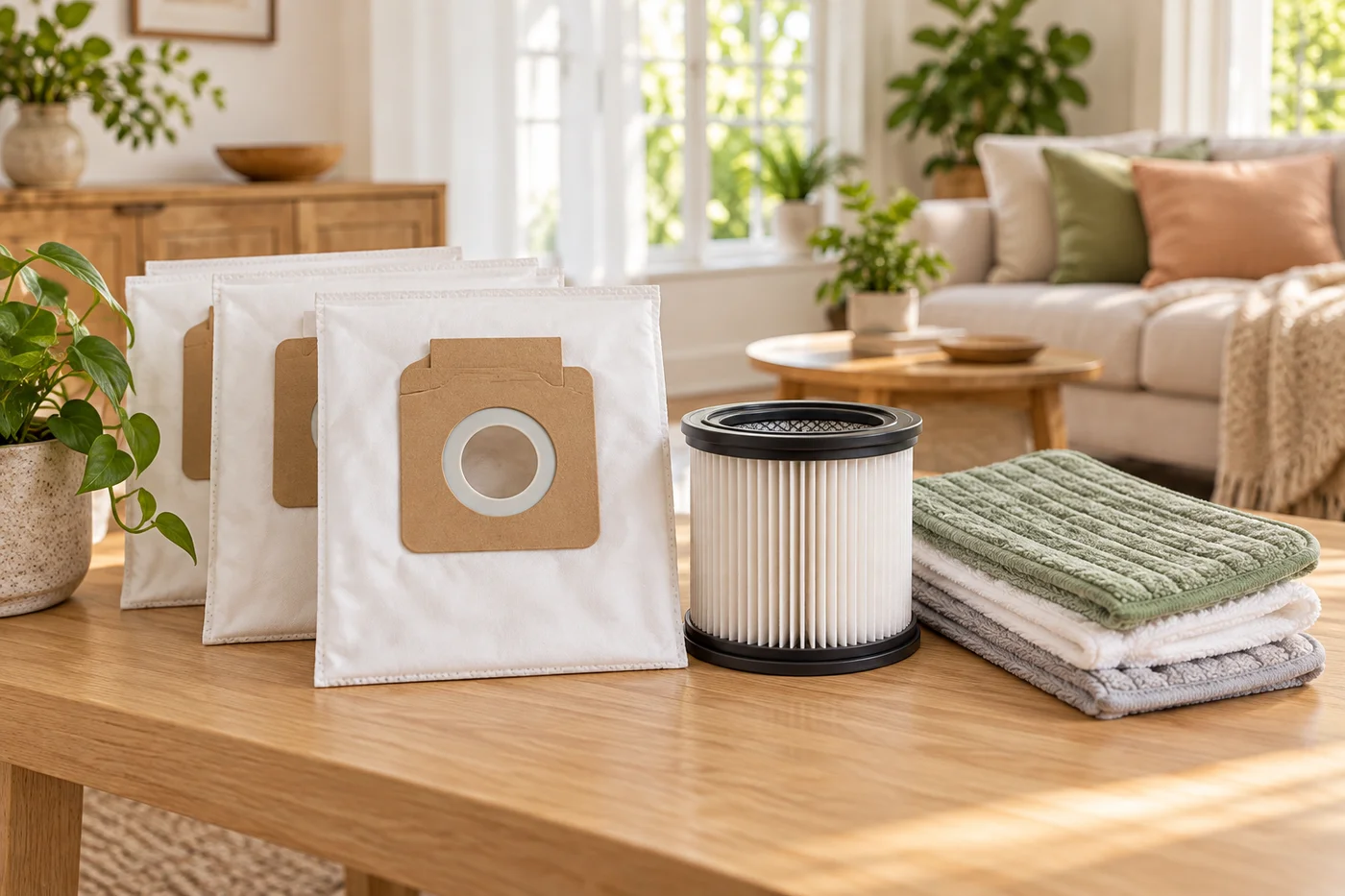
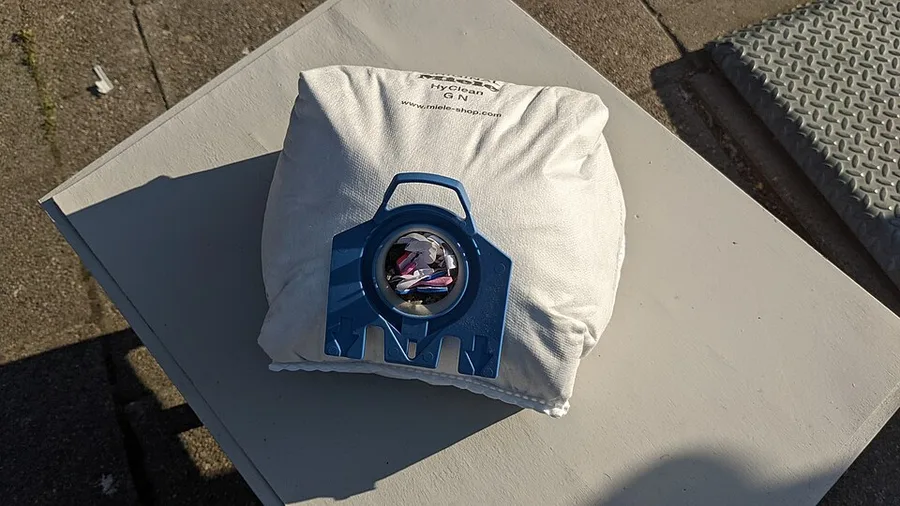
The used bag photograph makes its connection plate visible. It is an illustration of physical form, not advice to reuse the bag or buy that model. A replacement should be selected from the applicable parts information. Do not assume that two products with similar volume, shape or branding belong in the same supply calculation.
Show the unit-cost calculation
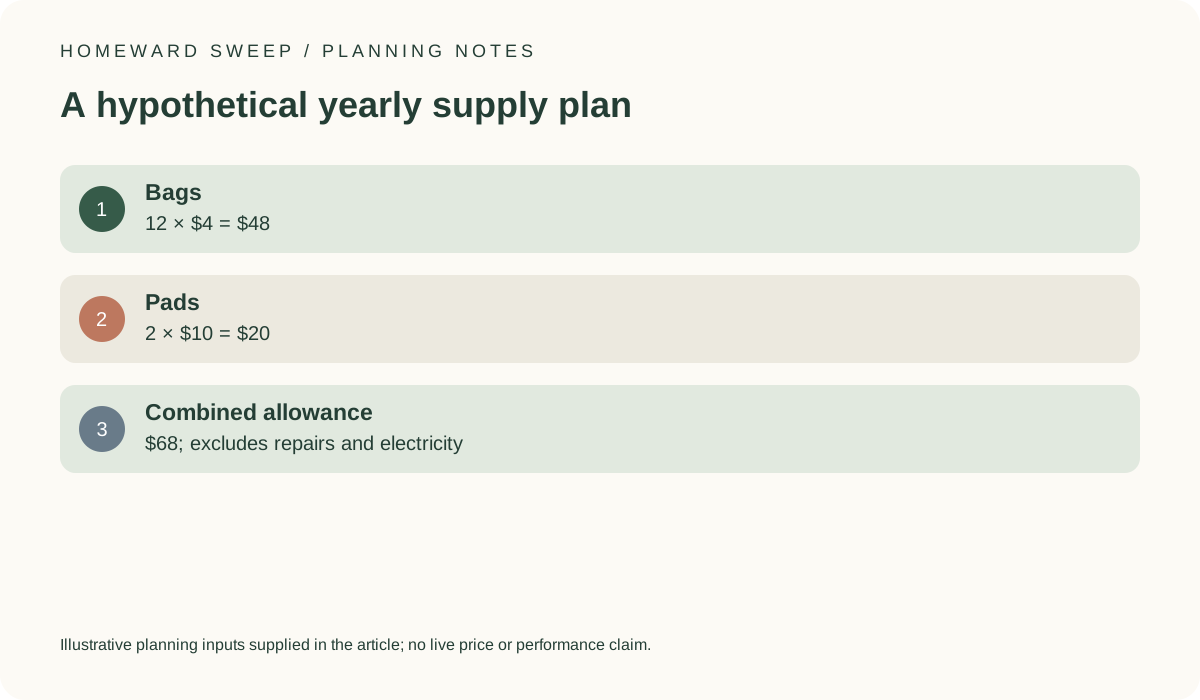
For a hypothetical example, a $24 pack of 6 compatible bags gives a unit cost of $4. Assuming 12 bags in a year produces a $48 bag allowance. If a separate hypothetical pad plan uses 2 pads at $10 each, that adds $20. The combined annual supply allowance is $68. These are invented prices and replacement assumptions, not observed retail offers or a prediction of household use.
The calculation is useful because each component can be changed independently. Replace the pack price with a dated quote and keep any tax or delivery treatment explicit. If some parts in a pack are not compatible or not needed, do not divide the price by the full pack count as though every item contributes equally to the intended routine.
Keep washing and replacement as different events
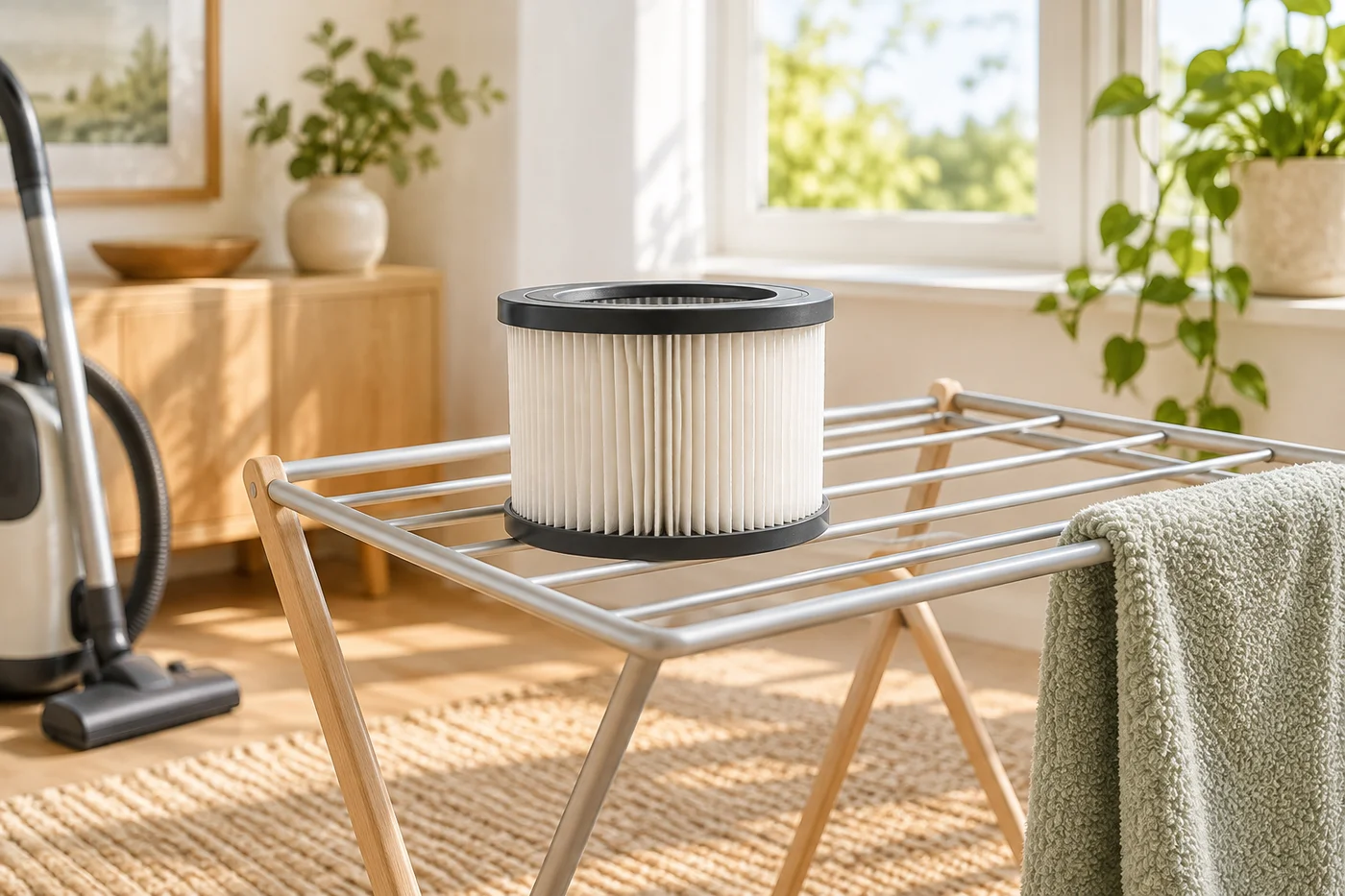
A washable component may need ordinary care without replacement at the same frequency. Read the exact instructions and distinguish a cleaning interval from a replacement condition. Do not turn a general care suggestion into a universal annual purchase count. Dyson's filter-care guidance, for example, concerns washing and drying requirements; it is not a replacement schedule for every vacuum filter.
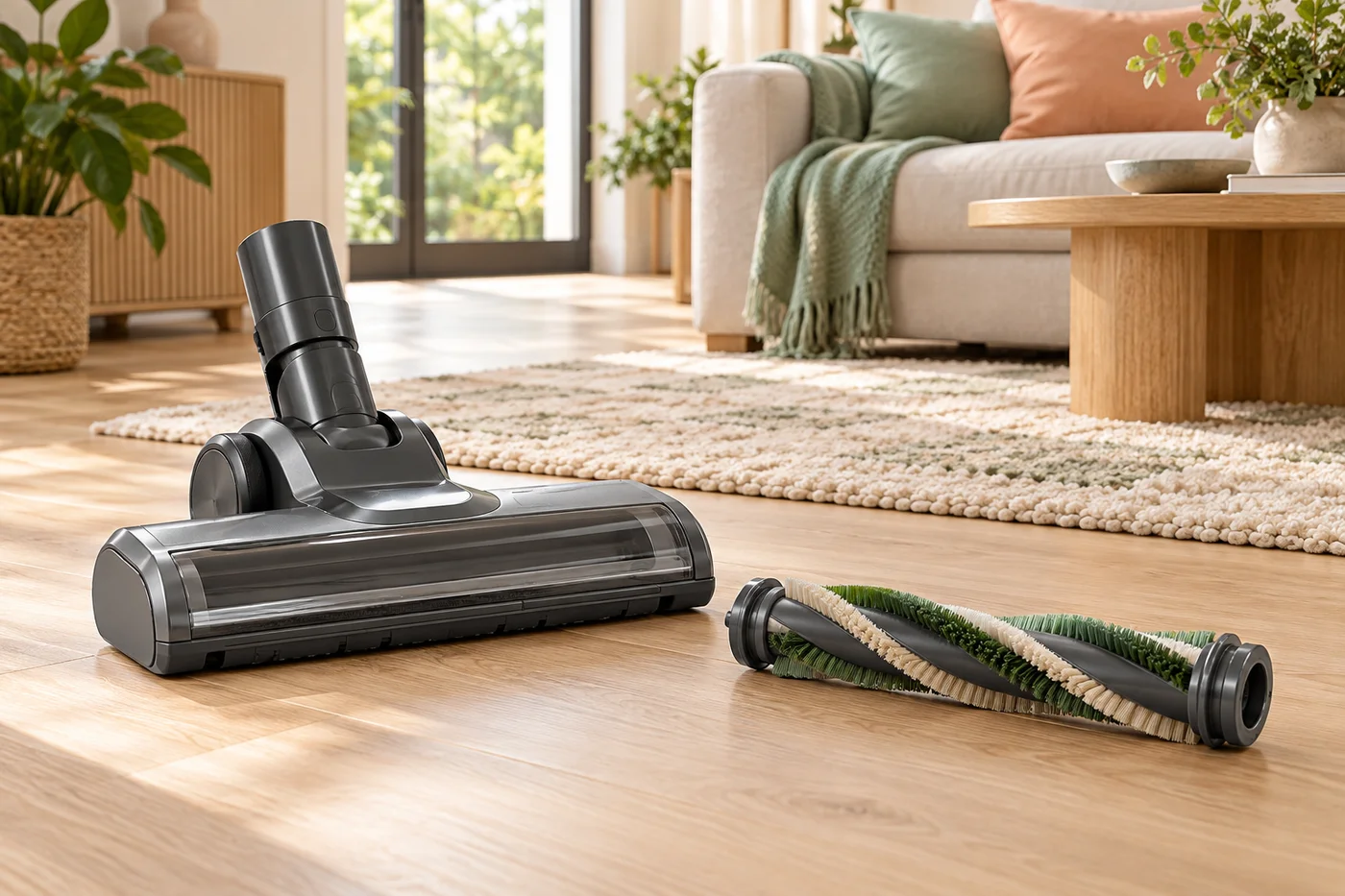
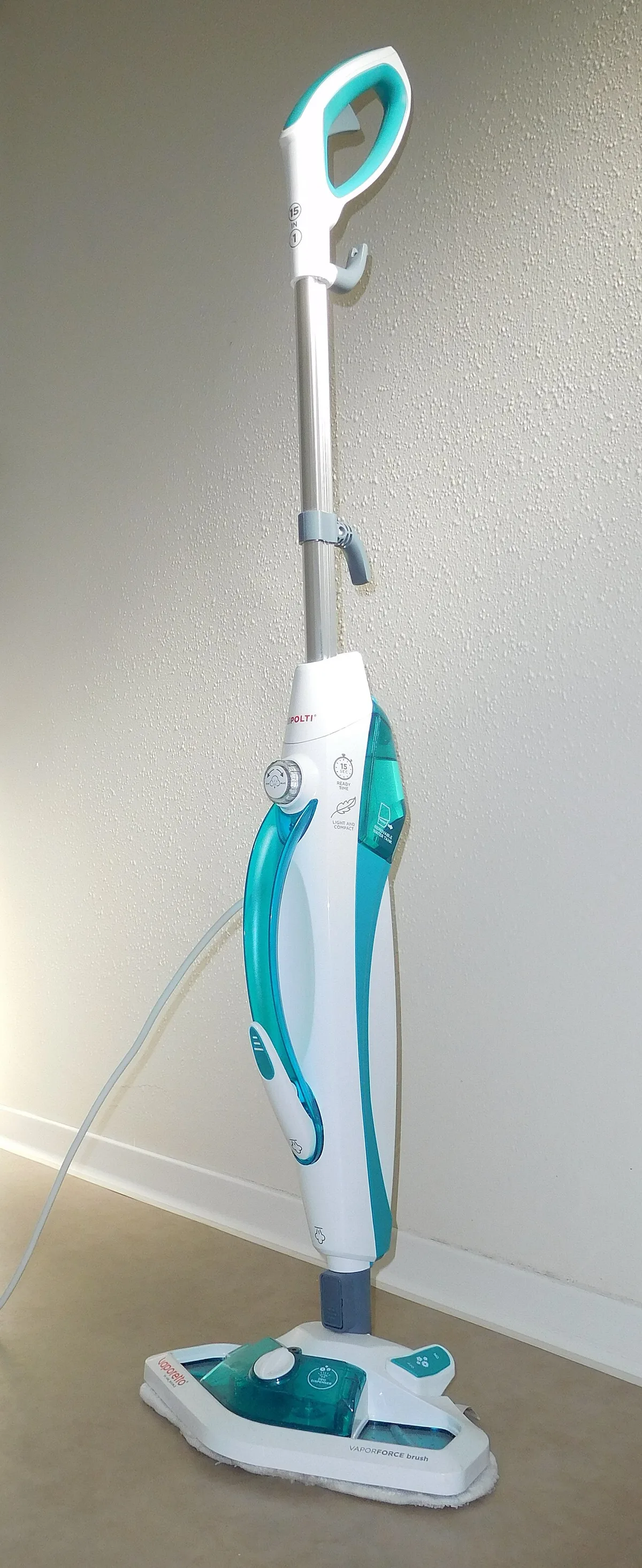
A steam appliance's pad requirements belong to that model and its instructions. The upright photo makes the pad-based form visible but does not establish a replacement interval. Keep your personal allowance labeled as an assumption until actual purchases provide a better basis. The goal is a transparent budget, not a falsely precise prediction of component life.
Dyson US cordless filter care ? Shark US steam-mop guidance ?
Separate supplies from other ownership costs
An annual consumable allowance does not include every possible cost. Keep repair, delivery, electricity and one-time accessories separate where relevant. Do not imply that a supply subtotal is a guaranteed total cost of ownership. If a required cost is unknown, write it as unresolved instead of quietly entering zero. Zero is a specific assumption that can make a comparison look more favorable than the evidence supports.
For a multi-year plan, the ownership calculator adds your annual allowance to the delivered purchase and other one-time entries. It does not forecast price increases, component failure or resale value. Use the same scope for each candidate, so one quote does not include supplies while another silently excludes them.
Update the plan from actual records
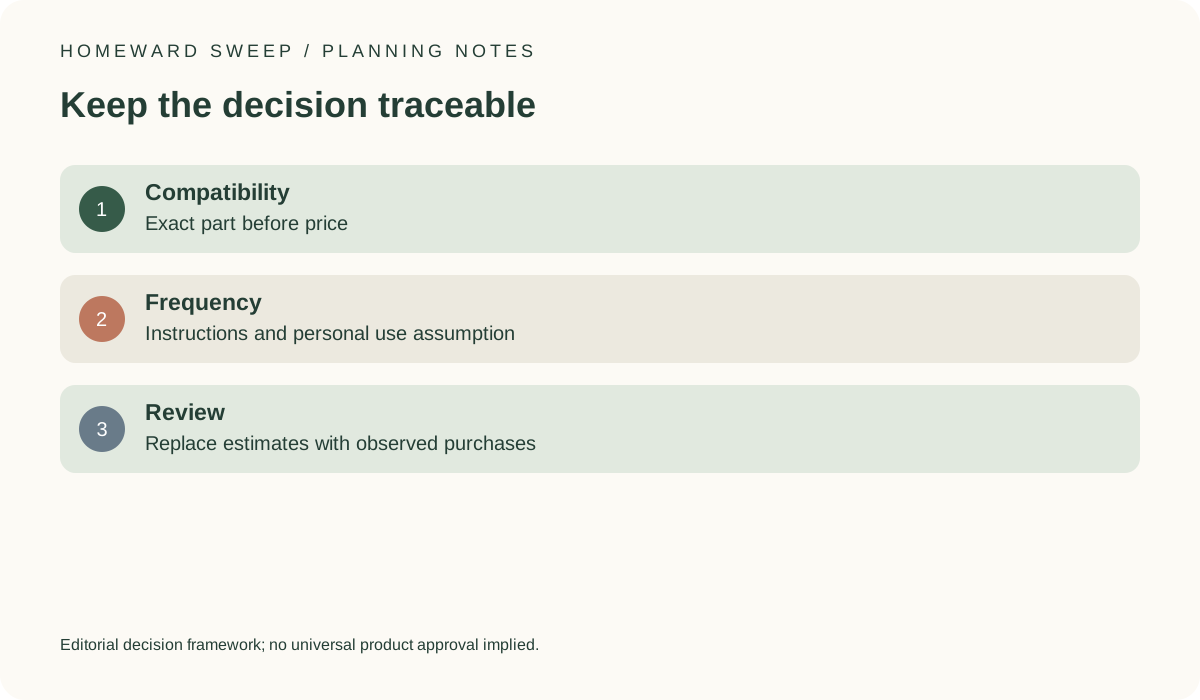
After purchase, save receipts and note which supplies were used. A small record of part, quantity, cost and date can replace the initial estimate with evidence. Recheck compatibility when the appliance, accessory or product generation changes. Avoid copying an old part number into a new machine's budget simply because the brand is familiar.
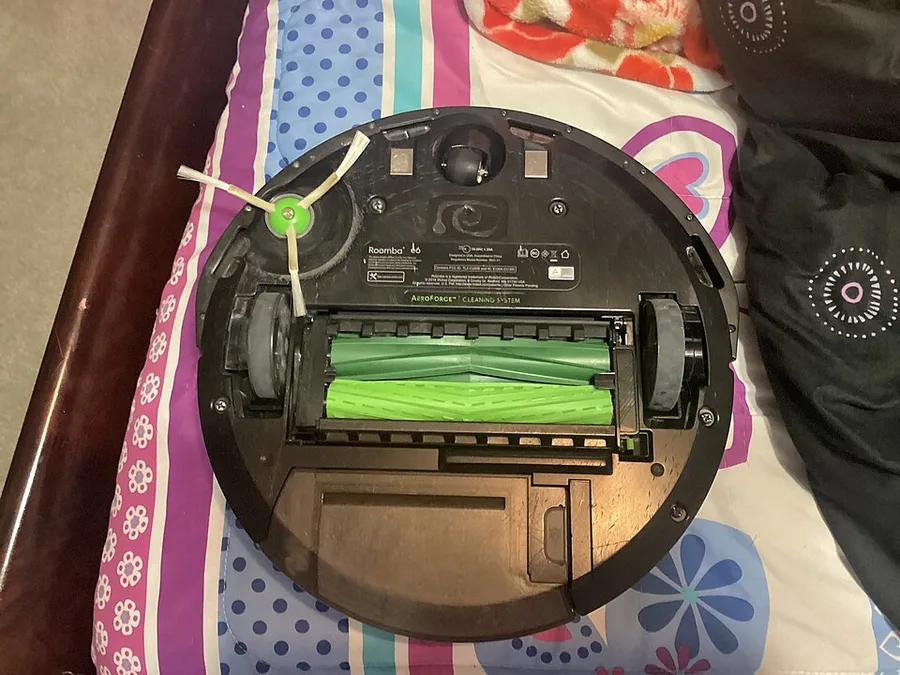
The robot-underside image helps keep different component systems distinct. It does not prove current parts availability or lifetime. A useful final allowance names the compatible parts, price date and frequency assumptions. If no authorized current price source is available, leave this as a user-entered planning exercise rather than presenting invented prices as a market comparison or making a savings claim that has not been measured.